Hyrule's Next Chapter: Legacy Features That Must Survive Tears of the Kingdom
From ghostly companions to custom warp points, Tears of the Kingdom's best features must return in the next Zelda to keep Hyrule's magic alive.
Time flies when you're fusing rocket shields to your backside. It’s been three years since Tears of the Kingdom reminded the world that a man in a green tunic can still glue two boulders together and call it engineering, and by 2026 the chatter about what the next mainline Zelda could look like has grown into a full-blown Hylian hurricane. Nintendo rarely follows a predictable script, but if they’ve learned anything from this era’s grand experiments, certain ingredients deserve a permanent spot on the chef’s table—while others should be chucked into Death Mountain.
Gone are the days when Link was a lone hero with nothing but a wooden sword and a bottle of milk. The ghostly companions in Tears of the Kingdom practically nudged co-op into the room before awkwardly stepping back. Summoning spectral versions of Sidon, Riju, and the rest felt like having a mini-army of overly enthusiastic interns who occasionally remembered to shoot an arrow in the right direction. 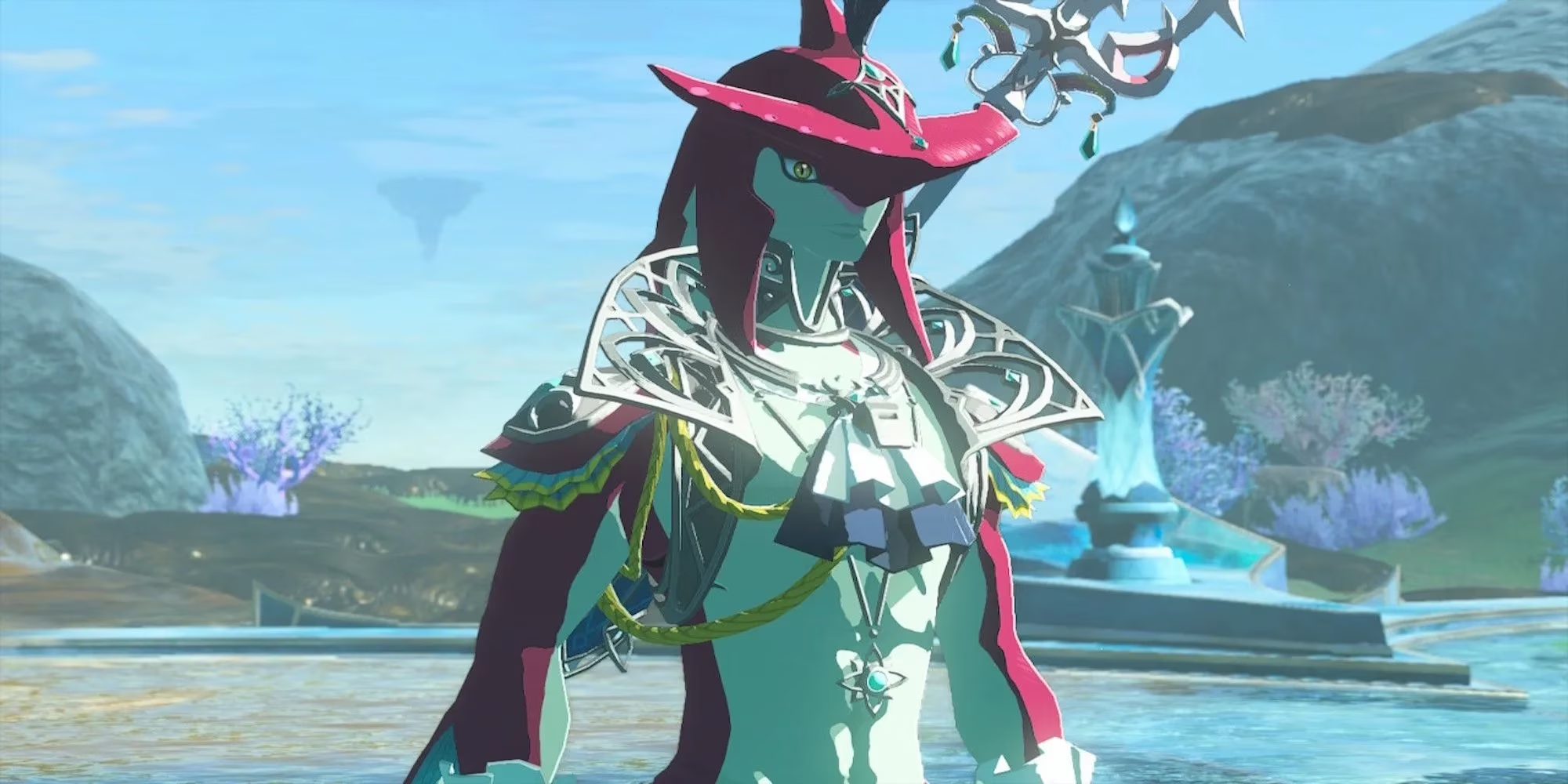 Sure, they weren’t chatty and they had a talent for vanishing right when a Lynel got serious, but the concept itself is pure gold. If true drop-in multiplayer still gives Nintendo cold feet, then at least keep the AI buddies around—maybe give them a personality upgrade so they can crack a joke or panic audibly when a Guardian laser locks on.
Open air was the magic word, and it’d be criminal to lock Hyrule inside a hallway again. Yet that doesn’t mean the next adventure needs a map the size of a small continent. Players fell in love with the quiet chaos of stumbling into a Gleeok den before they’d even found pants. 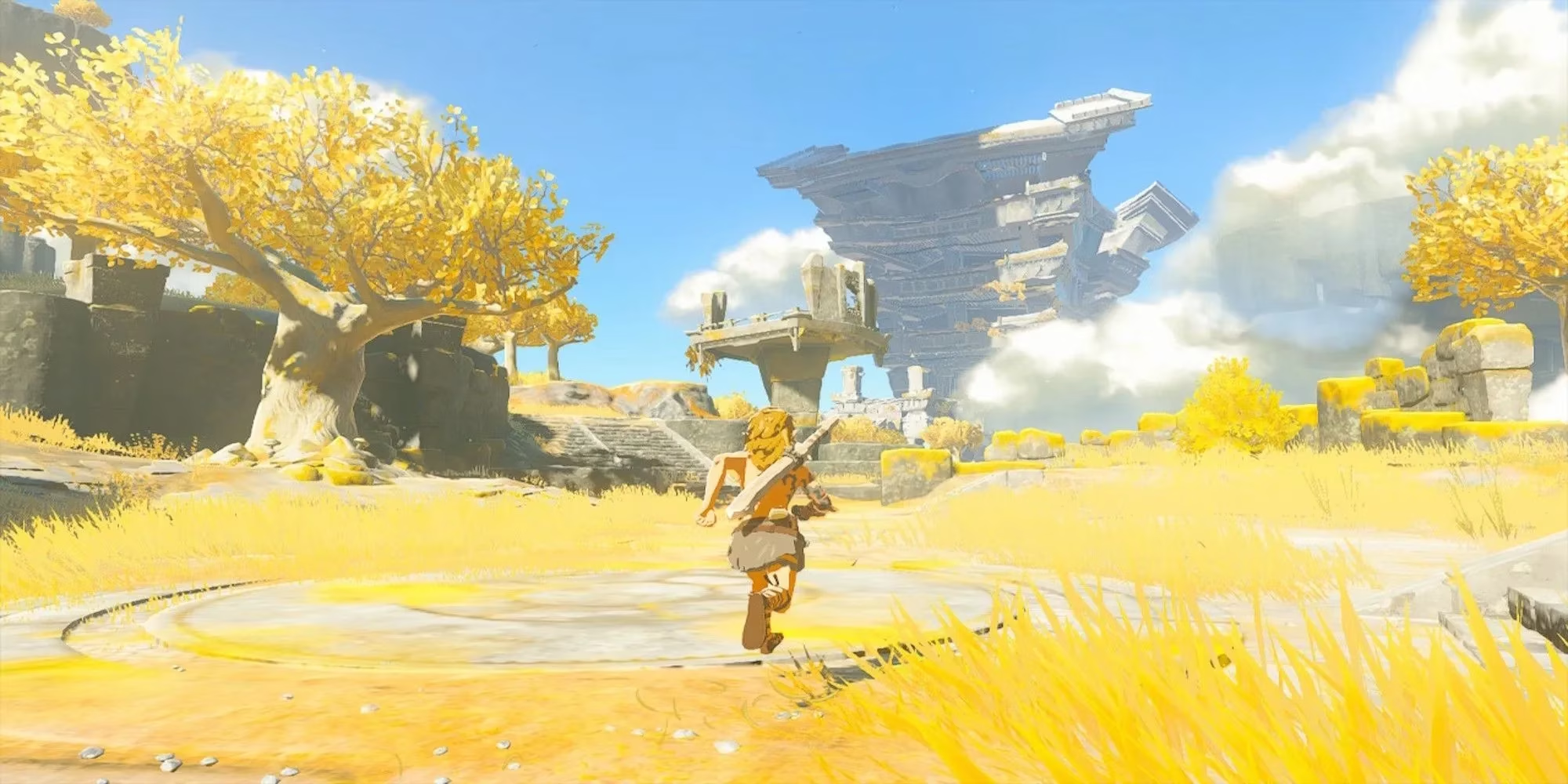 The real treasure is non-linearity—the freedom to tell the story sideways, upside down, or not at all. Keep the world open, but maybe not the exact same geography for a third go. At that point, even the Koroks would politely suggest retirement.
Fast travel is a blessing, but sometimes it’s a blessing that needs to be placed precisely on a suspicious ledge overlooking the final boss arena. That’s where Travel Medallions come in, and they were practically the unsung lifesavers of both Breath of the Wild and its sequel. Dropping a custom warp point anywhere—yes, even in the depths of Gloom’s Lair—felt like pulling a fast one on the gods. The next game should not only keep them but go absolutely bonkers: multiple customizable waypoints, perhaps a medallion that lets you summon a merchant, or a temporary warp that fizzles dramatically. Let’s get weird.
And then there’s the Yiga Clan, Hyrule’s own Team Rocket with a banana obsession and zero shame. 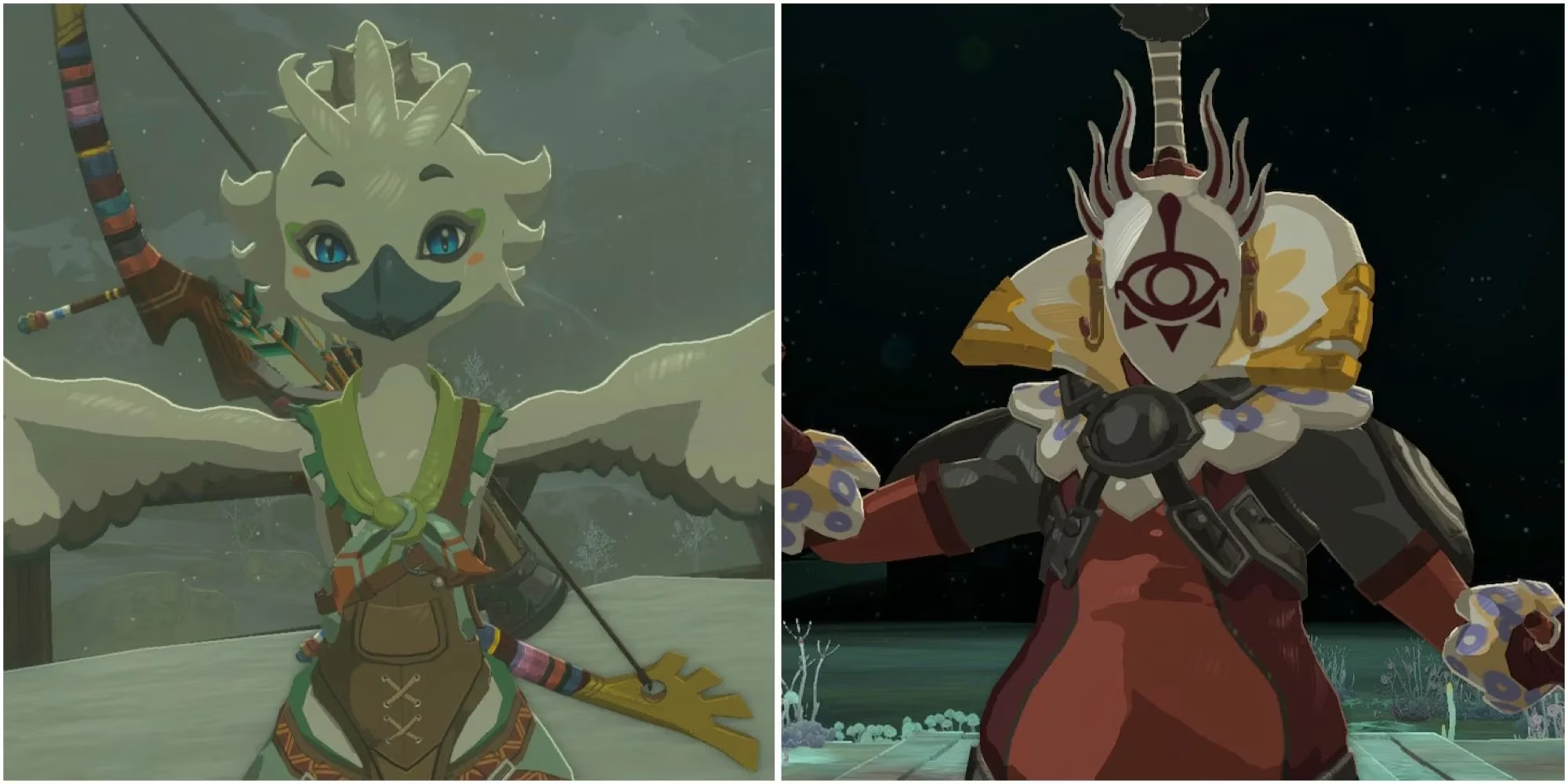 Their random ambushes in Tears of the Kingdom were fewer than before, but every surprise encounter still managed to inject a jolt of absurdity into a serene walk through a meadow. Disguised travelers revealing themselves with a cackle and a scythe—classic. This sort of chaotic spice must survive. The world feels more alive when it occasionally kicks you in the shins for no reason.
Let’s talk about the kitchen, because cooking’s importance cannot be overstated. Before 2017, buying potions felt like throwing rupees into a bottomless well. The cooking system handed players the power to turn a handful of mushrooms into a five-star banquet that healed every broken bone and bruised ego.  Tears of the Kingdom expanded the recipes and added delightful visual sizzle. The sequel should take it even further—regional cuisines, timed buffs that matter, or the ability to accidentally create inedible abominations that Link has to pretend to enjoy. Honestly, who didn’t want to serve a dubious meal to a unsuspecting NPC?
Weapon durability. There it is, the single most polarizing mechanic since Navi’s insistence on self-care. Fusing items to crumbling swords was a stroke of mad-scientist genius that made every fight feel like a last-ditch scramble, but the breakage rate still made some players weep. 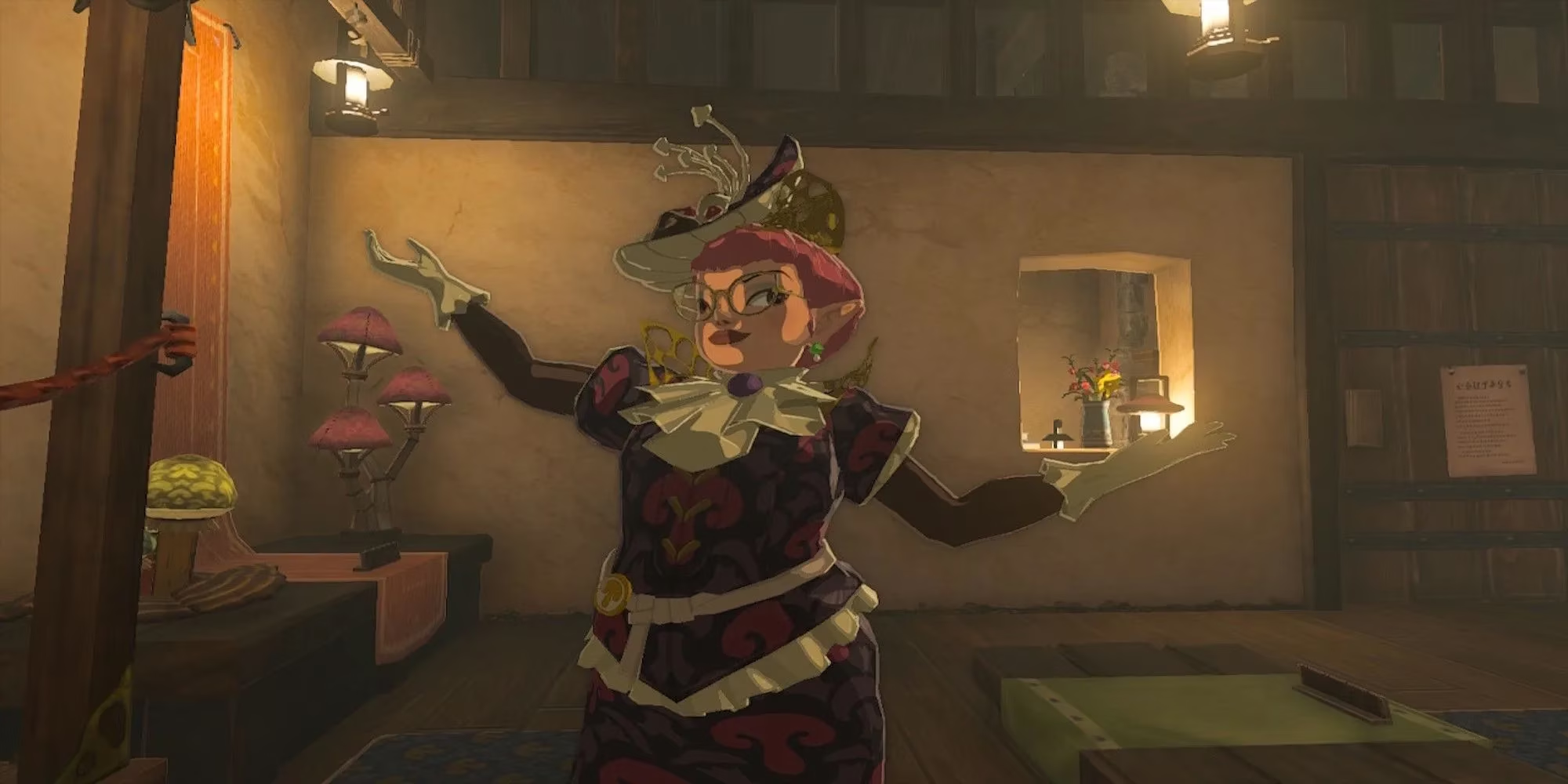 A fair compromise lives on the horizon: give Link a core set of unbreakable gear—noble, reliable, perhaps blessed by the goddess—while letting enemy weapons remain disposable, high-risk power plays. That way you can monkey around with a Moblin’s club and still have your trusty blade waiting when things explode.
Fashion, darling. Breath of the Wild and Tears of the Kingdom let Link strut around in everything from climbing bandanas to luminous skeleton suits, but the latter mostly recycled the closet. 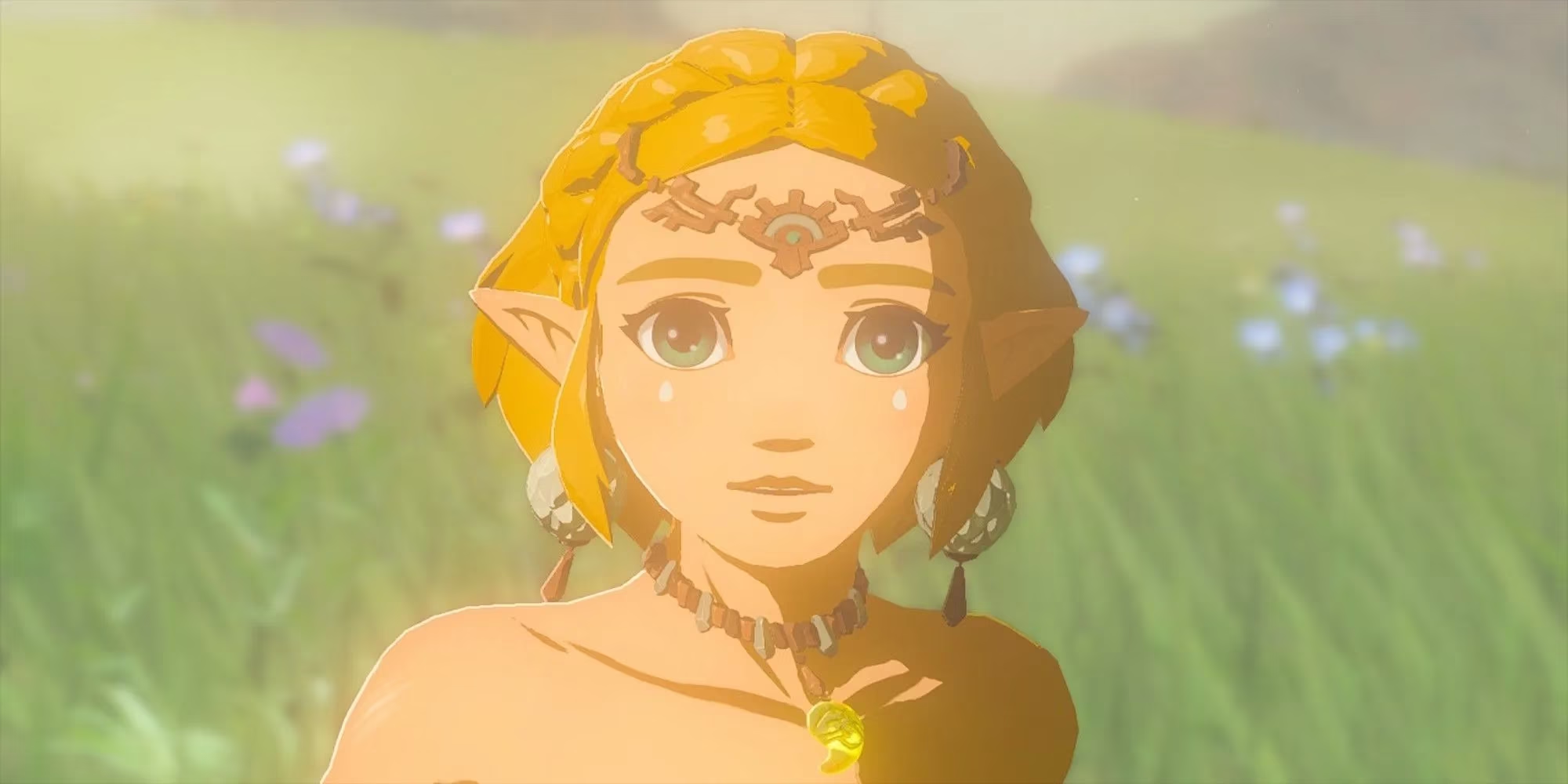 A world this lovely deserves more flair. Bring back the dye shop, but toss in patterns, capes, collaboration outfits from other Nintendo franchises, and—dare we dream—a hat that doesn’t look like a schoolboy’s nightmare. The green tunic is iconic, but it’s 2026; let Link have a closet that rivals a runway.
Finally, voice acting. We’ve come a long way from CD-i Link’s "Well, excuuuse me, Princess," but the series still clings to text boxes like a Bokoblin to a stolen apple. The cinematic moments in Tears of the Kingdom hinted at something grander. The sequel needs to lean in: more cutscenes, fully voiced key conversations, and maybe even a tune Link hums when he cooks perfectly. It’s time to put the silent protagonist’s companions squarely in the spotlight and let the story breathe.
If Nintendo plays their cards right, the next Zelda will feel like coming home to a renovated treehouse—familiar comfort wrapped in fresh surprises. And if it doesn’t? Well, the Yiga will probably have something to say about that.