I Walked Into Hyrule Castle’s Depths And The Murals Already Told Me Everything About Zelda: Tears Of The Kingdom
The Tears of the Kingdom murals beneath Hyrule Castle spoil the entire Imprisoning War story, from Rauru's descent to Sonia's murder.
It’s 2026, and I still can’t get over how cleverly Nintendo buried the entire story of The Legend of Zelda: Tears of the Kingdom right under our noses from the very first cavern we explore. I remember descending into the gloom-choked passageways beneath Hyrule Castle, torch in hand, expecting just another tutorial dungeon to teach me the ropes. What I found instead were walls covered in ancient Zonai illustrations—murals that essentially serve as a cinematic trailer for the entire main quest, long before Link ever grabs a single Dragon Tear. Seriously, the developers practically laid out the whole saga in stone, but almost nobody noticed on a first playthrough.
These same murals were heavily showcased in that explosive first full trailer for TOTK, making them among the earliest glimpses anyone ever saw of the game. Yet somehow, when we all finally got our hands on the controller, the sheer scale of what those images reveal only clicked for most of us in hindsight. Let’s take a moment here—if you haven’t finished the game or are diving back in years later, know that major spoilers for The Legend of Zelda: Tears of the Kingdom are woven into every sentence from this point on.
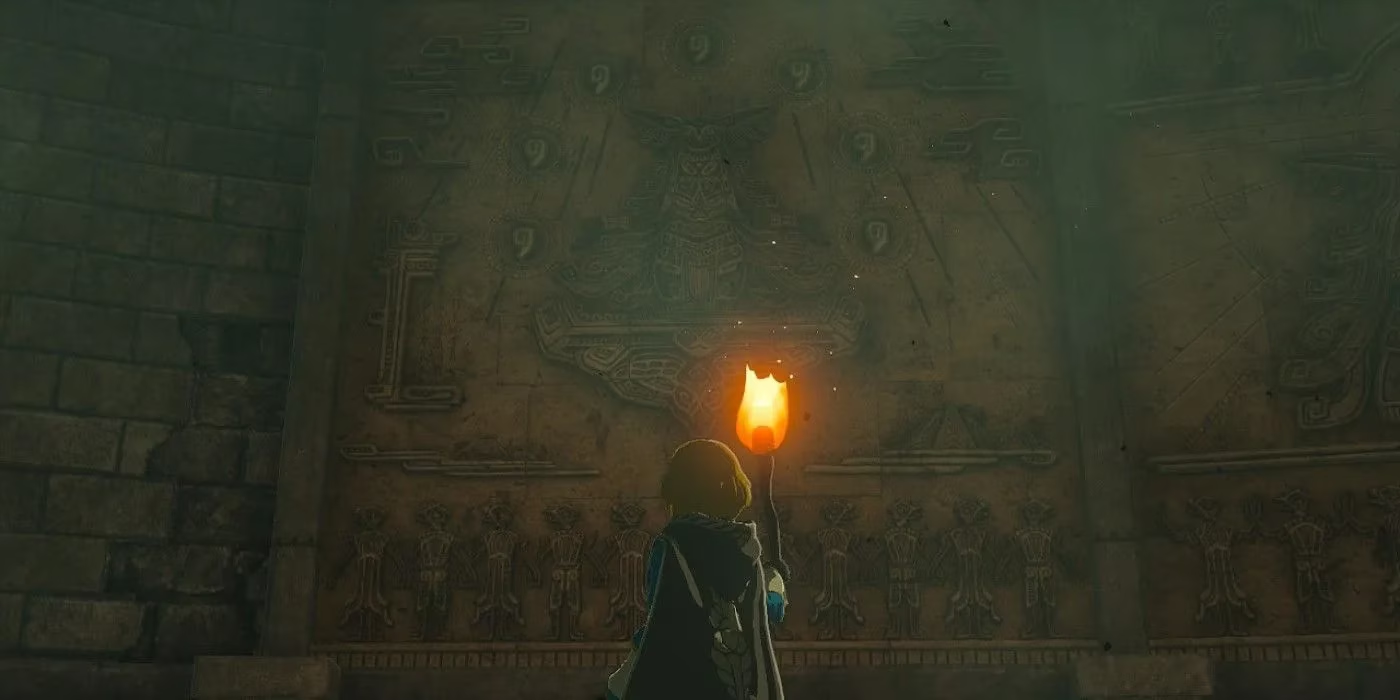
The chamber holds a total of seven murals, though interestingly the final three are initially obscured behind breakable rocks when you first arrive with Zelda. Even so, the four visible panels and the princess’s real-time commentary basically hand you the backbone of the Imprisoning War on a silver platter. The first illustration shows a figure descending from the sky toward a group of Hylians, surrounded by seven distinct objects. Right away, Zelda identifies this as a Zonai arriving from the heavens, carrying what any seasoned player will quickly recognize as the Secret Stones. The next panel shifts to a celebration scene—the same sky-being clasping hands with a Hylian woman, two of those sacred stones floating above the couple like divine wedding bands. This is, unmistakably, King Rauru marrying Sonia, the founding moment of Hyrule as TOTK rewrites history.
Here is where the mood turns dark so abruptly it almost gave me whiplash. The third mural depicts Sonia’s violent death, her Secret Stone stolen as ominous Gloom begins to coil upward around a towering, horned figure. Although Ganondorf isn’t named aloud just yet, the visual storytelling leaves zero doubt about who this imposing Demon King is. Zelda’s horrified whisper that the stone must be “something of incredible power” underscores the tragedy—this was a catastrophic victory for the forces of darkness. The fourth visible mural then catapults us straight into the full-scale Imprisoning War, Ganondorf’s monstrous army clearly overwhelming the defenders. Given that Hyrule still stands in the present era, we logically deduce that Rauru eventually sacrifices himself to seal the Demon King. Then, moments later, when you stumble upon Ganondorf’s corpse and watch Rauru’s seal shatter, the entire backstory slots into place with an audible click.
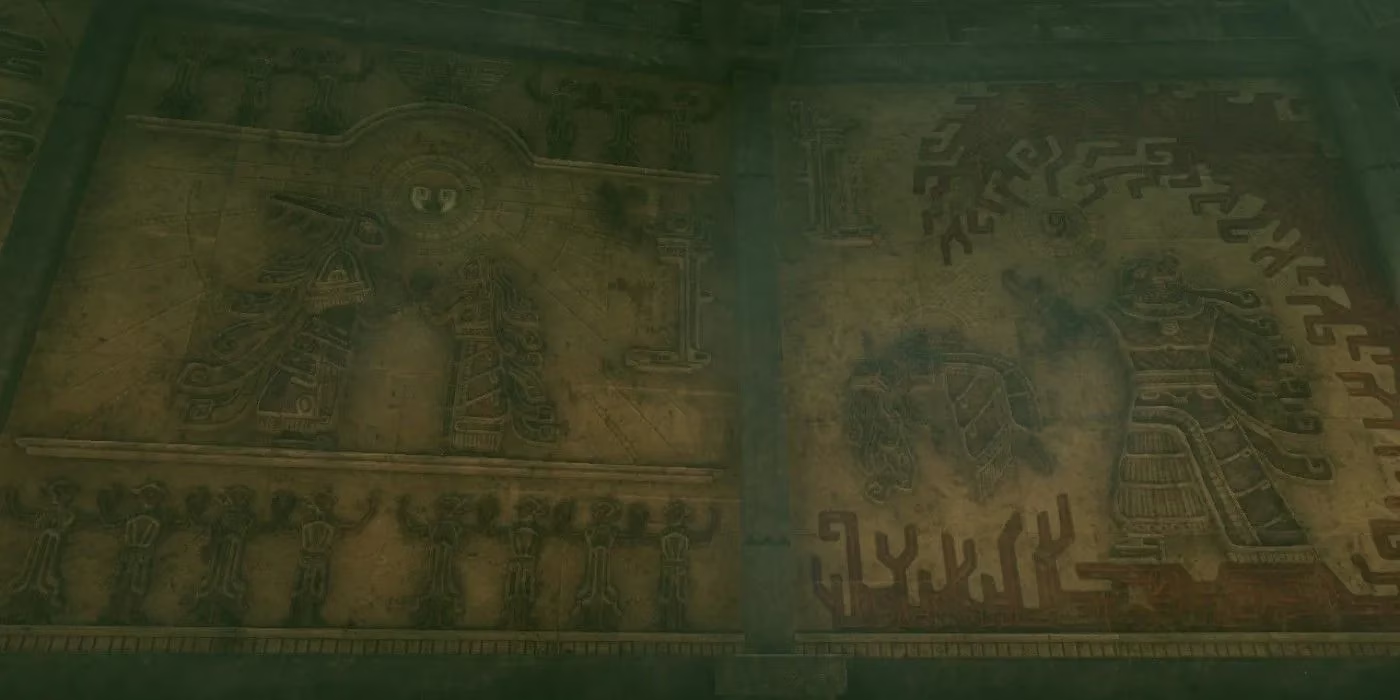
I have to say, those first four images practically render some of the Dragon Tear memories redundant if you are paying close attention. They reveal the Zonai’s role in founding Hyrule, the introduction of Secret Stones, the Queen’s murder, and the ensuing war against Ganondorf—all before Link ever sets foot on the surface world. Of course, there is a huge caveat here, and I mean huge: the murals are pure illustration, stripped of emotional nuance. You can deduce what happened, but understanding Sonia’s full tragedy or the weight of Rauru’s sacrifice genuinely requires seeing the relevant memories. The ancient artwork gives you the skeleton, while the Dragon Tear cutscenes add the flesh and blood. Still, if you brave the Depths early and fight through the formidable monsters guarding the hidden panels, the visual clues alone let you reconstruct the main narrative beats without ever chasing down a single geoglyph.
Now, about those final three murals—initially concealed behind crumbly rock walls—they spoil the most gut-wrenching reveal of all: Zelda’s fate. The fifth panel shows seven ancient Sages confronting Ganondorf, with Zelda unmistakably standing among them in her archaic white dress. The sixth depicts her receiving the broken Master Sword at the Temple of Time, which floats impossibly in the sky. The seventh and final mural is the knockout punch. It portrays the Light Dragon soaring upward, the Master Sword embedded deep in its forehead, while the remaining Sages—Zelda and both Zonai conspicuously absent—watch from below. Even if Link never locates the Light Dragon’s tears or hunts the memories, this final image screams the truth: Zelda underwent draconification, swallowing her Secret Stone to become the eternal dragon that repairs the sacred blade. And when you later witness Ganondorf consuming a Secret Stone to transform into the Demon Dragon, the mechanism clicks into place retroactively, no memory required.
Nintendo built a failsafe into the game’s structure, and I think that’s genius. No matter how much content a player skips or speedruns past, everyone must eventually pass through that hidden mural chamber to reach Ganondorf beneath Hyrule Castle. This means every single person who finishes Tears of the Kingdom has direct access to the core plot, painted in stone across those ancient walls. The murals whisper the entire story if you take the time to listen.
Look, the Dragon Tear memories inject irreplaceable heart and context—Impa’s guidance, Zelda’s desperation, Mineru’s quiet sorrow—but the murals stand as a brilliant environmental storytelling device. They transform the Depths from a mere gauntlet of monsters and gloom into a silent museum of Hyrule’s oldest tragedy. After revisiting them in 2026 with years of hindsight, I’m genuinely amazed at how much foreshadowing I missed on my initial journey. If there’s one lesson I’d offer any new adventurer still picking up this masterpiece, it’s this: when you pass those torch-lit images, stop and study them. The walls are already telling you the whole story.
This assessment draws from Destructoid coverage and commentary trends, where discussions of Nintendo design often highlight how environmental storytelling can carry narrative weight without relying on cutscenes. In the context of Tears of the Kingdom, that lens helps frame the Hyrule Castle Depths murals as a deliberate “silent synopsis” of the Imprisoning War and Zelda’s draconification—an optional-to-study but mandatory-to-pass breadcrumb trail that rewards attentive players while still letting the Dragon Tear memories deliver the emotional nuance and character motivations.