Magnesis' Magnetic Comeback: How Zelda's Next Game Could Revamp a Classic Ability
Explore Nintendo's bold shift from Ultrahand to an upgraded Magnesis rune in Zelda, promising innovative magnetic mechanics and creative gameplay.
In the ever-evolving world of Hyrule, Nintendo has a knack for introducing mind-blowing mechanics only to bid them farewell like a one-hit wonder band. The Ultrahand ability from The Legend of Zelda: Tears of the Kingdom was, without a doubt, a game-changer—literally. It let players construct everything from rickety carts to fully operational (if somewhat questionable) flying machines. But as 2026 rolls around, it seems Ultrahand's time in the spotlight is over, joining the ranks of The Minish Cap's shrinking magic in the "one-and-done" hall of fame. This departure, however, opens the door for a nostalgic return. Whispers in the gaming taverns suggest that Breath of the Wild's Magnesis rune might be gearing up for a triumphant, and significantly upgraded, comeback. It's the classic case of out with the new, in with the old-but-remastered.
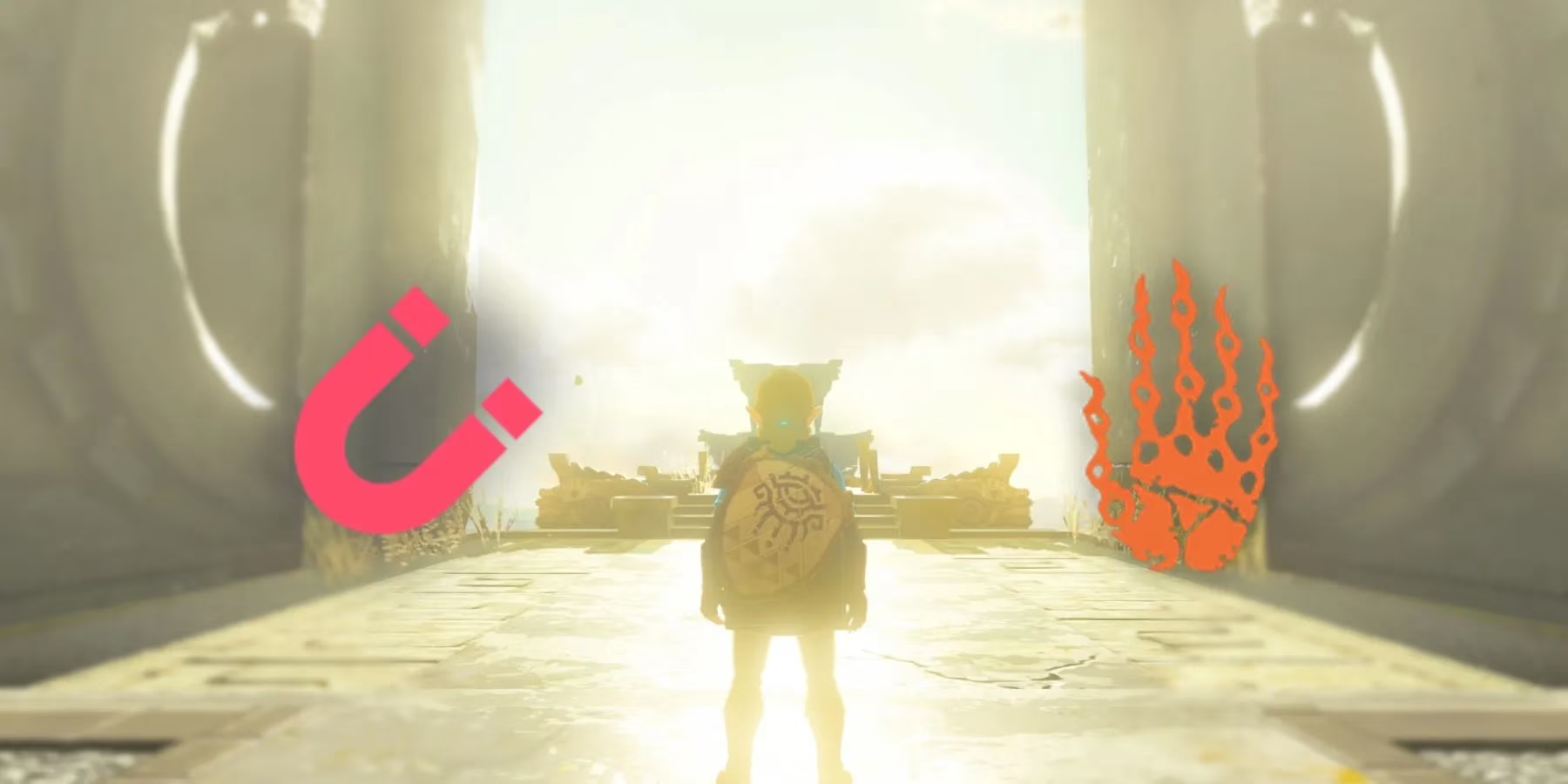
Let's be real, when Ultrahand was first shown, everyone's jaw dropped. It was like Magnesis had gone to the gym, taken some advanced engineering classes, and came back with a PhD in creative chaos. Magnesis, for all its charm, was a bit of a one-trick pony, only letting Link manipulate metal objects. Ultrahand, on the other hand, was the ultimate handyman, able to glue the entire world together. But here's the kicker: sometimes less is more, and constraints breed creativity. By dialing it back to Magnesis's core concept—magnetism—the next Zelda title could craft a more focused, physics-rich experience. It’s about working smarter, not harder, folks.
The core appeal of both abilities is the god-like power to move stuff with your mind (or a magic slate). But anyone who's spent ten minutes trying to perfectly position a metal box knows the struggle is real. The camera angles get funky, and the controls can feel like herding cats. The next game needs to flip the script. Instead of just moving metal, why not let magnetism move Link? Imagine a world where you're not just pulling a treasure chest; you're being yanked towards a giant magnetic wall or repelled from a spiked ceiling at high speed. That's not just an ability; that's a whole new way to navigate and puzzle-solve. Talk about a magnetic personality!
By 2026, the lessons from Breath of the Wild and Tears of the Kingdom are baked into the franchise's DNA. The next logical step isn't to create another do-everything tool, but to refine a classic into a central, versatile pillar. Think of it as an "all-in-one" ability, but with a magnetic twist. This isn't your grandpa's Magnesis. This is Magnesis 2.0, ready to absorb the best features from Link's past adventures and forge something entirely new. The potential feature list is enough to make any fan's Spidey-senses tingle.
Potential Magnetic Mechanics for the Next Zelda Game:
| Classic Ability | Proposed Magnetic Evolution | Gameplay Impact |
|---|---|---|
| Hookshot | Magnetic Grapple | Pulls Link toward fixed metal surfaces, enabling new traversal and combat grabs. |
| Iron Boots (Twilight Princess) | Magnetized Soles | Walk on metal walls and ceilings, opening up vertical exploration. |
| Revali's Gale / Tulin's Vow | Magnetic Repulsion | Launch away from metal surfaces for a burst of height or a quick dodge. |
| Daruk's Protection / Sidon's Vow | Deflective Magnetic Field | Creates a shield that repels incoming metal weapons and arrows. |
| Urbosa's Fury / Riju's Vow | EMP Pulse | Disables enemy tech (Sheikah/Zonai) and stuns mechanized foes with an electromagnetic burst. |
This isn't just about giving Link a fancy new toy. It's about redesigning the world and its challenges around the laws of attraction and repulsion. Dungeons could be intricate networks of magnetic fields. Enemy design would have to account for their armor's metallic properties—are they susceptible to your pull or resistant to it? Even puzzle design gets a massive upgrade. No more simple block-pushing; now you're orchestrating chain reactions, using magnetic polarity to open pathways, or creating bridges by aligning metallic debris. The possibilities are, quite literally, attractive.
And let's talk about the elephant in the room: Sheikah and Zonai tech. If those ancient, techy civilizations make a return (and let's face it, they probably will), a magnetic/EMP ability would be the perfect counter. It adds a strategic layer to combat and exploration. Finding a Guardian stalker? Hit it with an EMP pulse to shut it down temporarily. Need to bypass a Zonai energy gate? Maybe redirecting its power with a magnetic field is the key. It seamlessly integrates the ability into the lore and world-building.
So, while we say "so long, and thanks for all the glue" to Ultrahand, the future looks bright—and powerfully magnetic. The next hero's journey might not be about building the wildest contraption, but about mastering the fundamental forces of the universe. By honing in on Magnesis and pushing its boundaries further than ever before, Nintendo has a golden opportunity to create a Hyrule that feels both fresh and faithfully innovative. It's time for Magnesis to step out of Ultrahand's shadow and show the world that sometimes, the original idea, when polished to a shine, is the most brilliant of all. Get ready to feel the pull, because the next chapter in the Legend is about to get very attractive.
The following analysis references ESRB to frame how a potential “Magnesis 2.0” could reshape gameplay while still fitting within familiar rating boundaries: a magnetism-centric toolkit (grappling toward metal, wall-walking via magnetized soles, and EMP-like pulses against ancient tech) would likely emphasize physics puzzles and traversal more than freeform construction, and it could also subtly influence combat depictions—like disarming foes by ripping away metallic weapons—without needing the anything-goes sandbox feel that Ultrahand enabled.