Tears of the Kingdom Still Struggles With Its Loot Problem in 2026
Tears of the Kingdom's loot problem makes treasure chests a persistent disappointment, undermining exploration with weak rewards and scarce rupees.
By 2026, The Legend of Zelda: Tears of the Kingdom has aged into a strange contradiction. It remains one of the most inventive open-world games ever made, a sandbox where players can fuse a rusty sword to a boulder or build a flying machine from fans and wood. Yet for many explorers, one old frustration refuses to fade: the treasure chest. As a direct sequel to Breath of the Wild, Tears of the Kingdom had a clear chance to fix the earlier game's loot problem. Instead, it carried that flaw into a bigger Hyrule, where the disappointment often feels even sharper.
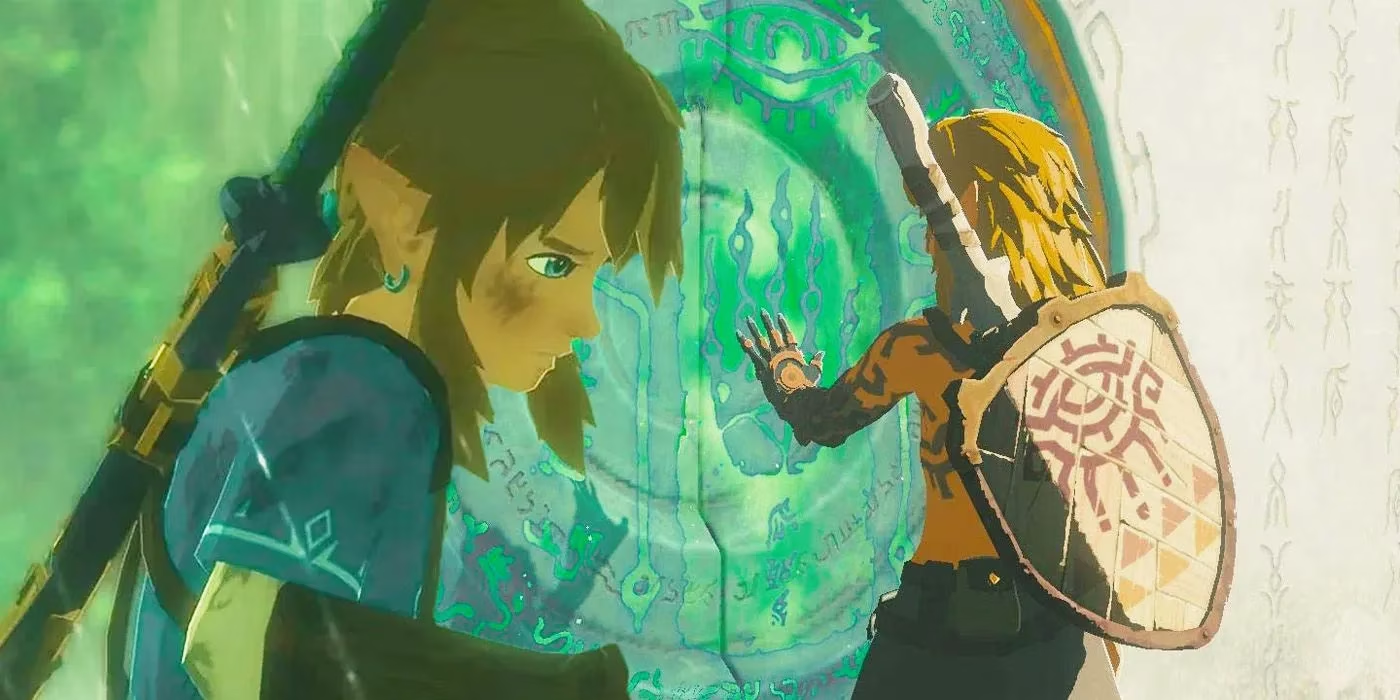
A typical story begins with effort. Link spots a suspicious rock formation, solves a shrine puzzle, defeats a Bokoblin camp, or dives into a cave. The world promises a secret. The player follows. Then the chest opens, and the reward is five arrows, or a single Sundelion, or a weapon that will break after a few swings. The journey was exciting. The payoff is a sigh. That mismatch is the heart of Tears of the Kingdom's loot problem, and by 2026 it is still one of the most common complaints among players who return to Hyrule.
A Chest Full of Letdown
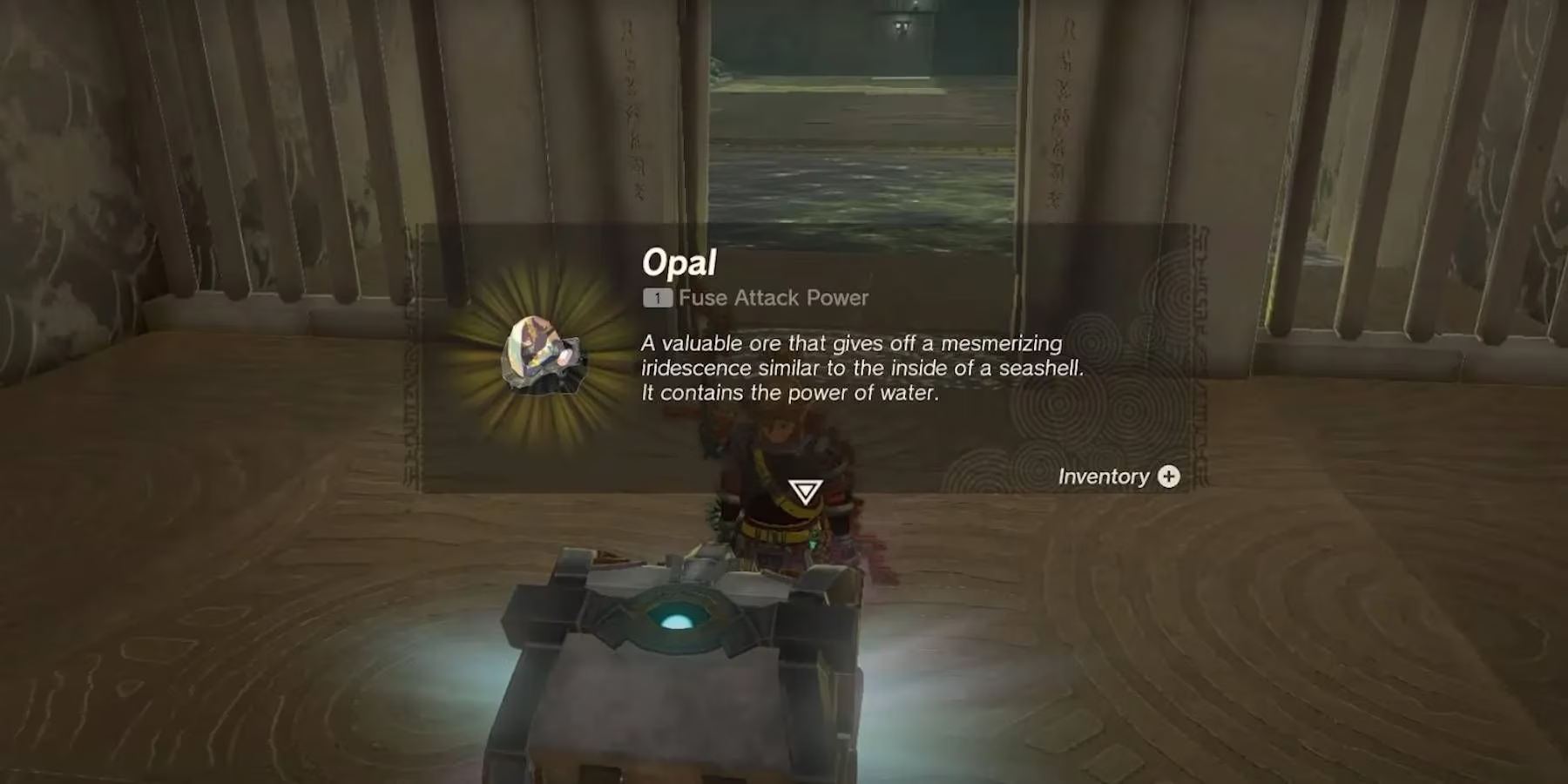
Much like in Breath of the Wild, treasure chests are frequently lackluster in Tears of the Kingdom. There is no shortage of chests to find. They hide behind puzzles, inside enemy camps, at the bottom of caves, and on sky islands that require careful planning to reach. Yet a surprising majority contain stingy prizes. A bundle of five arrows. A measly single Sundelion. A low-tier material that Link already has dozens of. Even with the Hyrule Compendium filled out and Sensor+ pinging nearby chests, the reward rarely justifies the detour.
This is not a small issue in an open-world game. Exploration is a contract between designer and player. The designer hides something; the player spends time, skill, and curiosity to find it; the reward should make that investment feel wise. In Tears of the Kingdom, the contract is often broken. Link may climb a rainy cliff, fight through a Construct camp, and solve a physics puzzle, only to receive a handful of arrows. The chest itself becomes a punchline.
| Chest reward | Player reaction |
|---|---|
| Five arrows | A sigh and a quick inventory check |
| One Sundelion | A shrug |
| A common weapon | Brief use, then a broken handle |
| A low-value gem | A reminder that rupees are scarce |
The Rupee Problem Makes It Worse
Tears of the Kingdom's mediocre loot does not only sting in the moment. It has long-term consequences. Compared to Breath of the Wild, making money is far more difficult, primarily because gems sell for a fraction of their former prices. Link's pockets feel lighter, and his options feel narrower. He could have benefited from more substantial chest rewards, but instead the chests often serve as a harsh reality check. Players may find themselves grinding for rupees, selling materials they would rather keep, or skipping optional content because the expected payout is so low.
In 2026, that economy still shapes the experience. A player who wants to upgrade armor, buy ancient arrows, or simply feel prepared for a tough boss must often farm. The open world is enormous, but its rewards are not always proportional to its size. When a treasure chest contains five arrows, it does not feel like a secret. It feels like an insult with a lid.
Exploration Loses Its Spark
Having a mediocre loot system is far from ideal for a game like Tears of the Kingdom. Much of the appeal of Hyrule's sprawling map comes from the prospect of finding hidden locations and secret treasures. The sky islands, the Depths, and the caves all invite curiosity. But when the treasures are not actually worthwhile, the motivation to explore can quickly dissolve. Why chase every chest if most of them contain the same forgettable items? Why solve another puzzle if the prize is a single mushroom?
Rewarding players with better items, even if it meant making treasure chests more rare, could have made looting far more exciting and satisfying. A chest should feel like a small event. It should offer a rare weapon, a useful armor piece, a pile of rupees, or a strange fuse material that changes how Link approaches combat. Instead, Tears of the Kingdom often spreads its rewards too thin, turning potential discoveries into routine disappointments.
What Could Have Been
Tears of the Kingdom did many things better than Breath of the Wild. Ultrahand and Fuse gave players more creative freedom than ever. Quality-of-life changes, such as saving recipes, made the game smoother. The world was bigger, stranger, and more vertical. Yet the loot problem remained, and in some ways it grew worse because the world demanded more travel and more experimentation. A few design choices could have helped:
-
Make chests rarer, but fill them with meaningful rewards.
-
Scale treasure value to the effort required to reach it.
-
Let chests contain rupees, rare armor, or unique fuse materials more often.
-
Use Sensor+ to guide players toward high-value chests, not just any chest.
-
Treat optional puzzles as stories with satisfying endings, not busywork with arrow bundles.
By 2026, players still remember the best moments of Tears of the Kingdom: launching into the sky, building a ridiculous vehicle, or fusing a rocket to a shield. They also remember the worst: opening a chest after a long climb and finding five arrows. That memory is a warning for any future Zelda game. An open world lives on the promise of discovery. If the discovery is not worth the journey, the map may be vast, but the adventure feels smaller.
The Legend of Zelda: Tears of the Kingdom remains a remarkable game. Its loot problem, however, remains a remarkable missed opportunity. In 2026, the lesson is clear: a treasure chest should not just be a box. It should be a reason to keep exploring.