The Legend of Zelda: How a Series Redefined Gaming Across Decades
The Legend of Zelda revolutionized gaming by inventing the action RPG and save system, then shaped 3D open worlds with Ocarina of Time.
The Legend of Zelda stands as a colossus in the gaming landscape, a franchise whose name alone conjures memories of brave heroes, mystical artifacts, and worlds brimming with secrets. By 2026, the series has not only endured but continuously reshaped what players expect from interactive adventures. Its journey began in an era of blocky sprites and simple chiptunes, yet even then, it planted seeds that would grow into towering innovations.
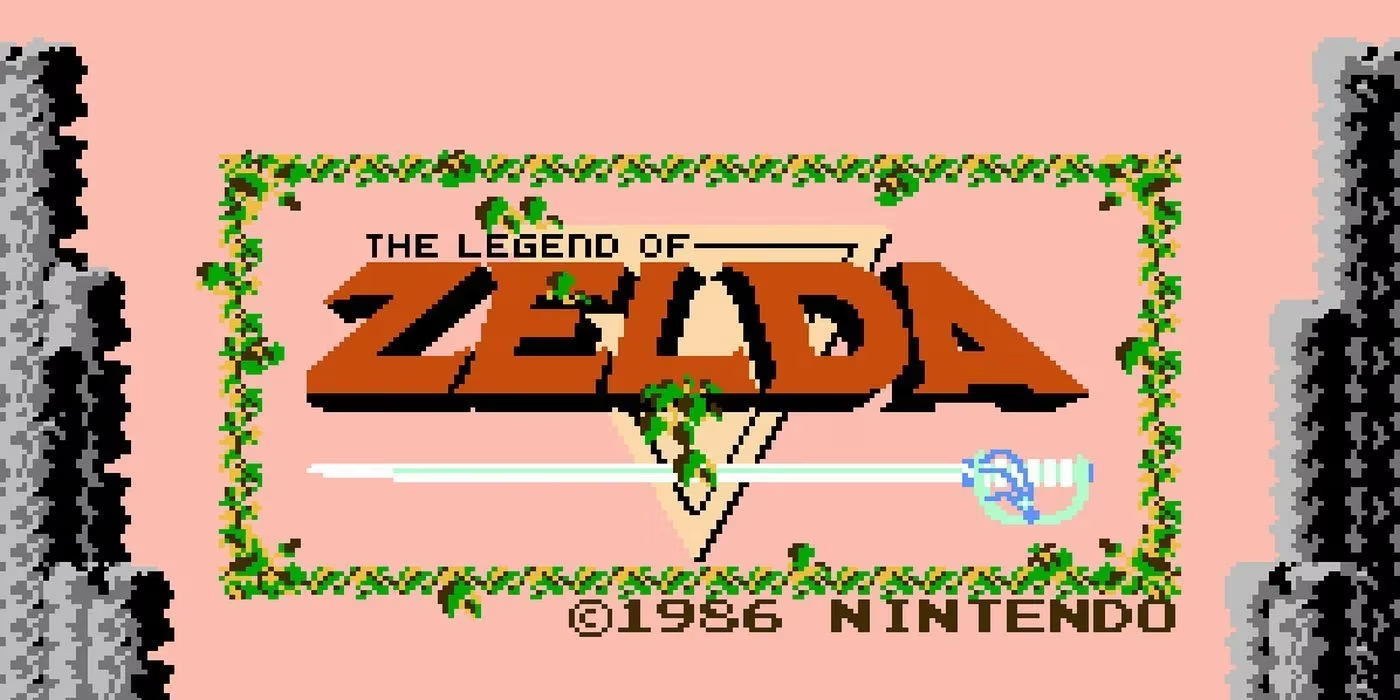
The original 1986 release on the NES was a gamble that paid off spectacularly. It introduced a sprawling fantasy realm where players could wander in any direction, encounter monsters, and uncover dungeons without a strict sequence. This freedom was unheard of at the time. But what truly set it apart was a feature so ubiquitous today that its absence seems unthinkable: the ability to save progress. Before this, most games sent players back to the beginning after a power-off. The golden cartridge brought permanence to the journey, inventing a persistent world that remembered Link’s deeds. Was it any wonder that the action role-playing genre traced its roots directly to this pioneering design?
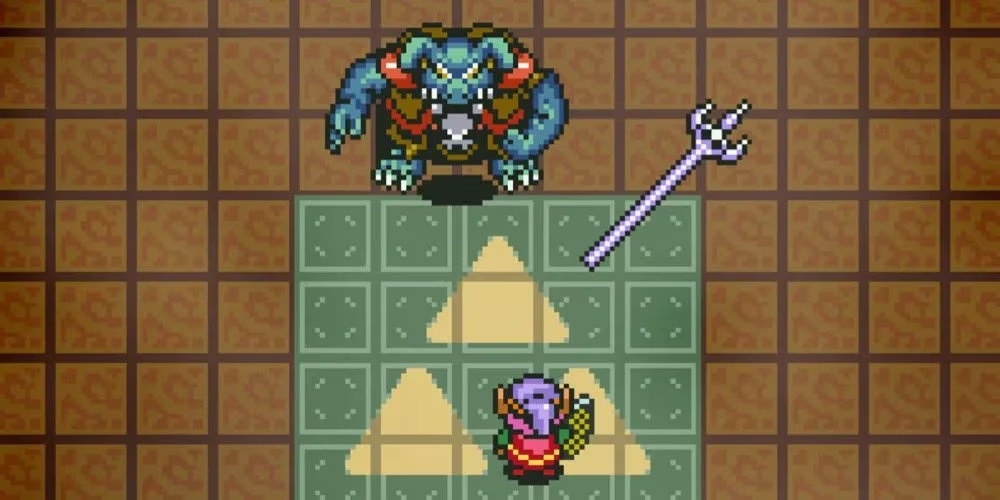
As the technology advanced, so did the series' ambition. A Link to the Past arrived on the Super Nintendo and crystallized the 2D adventure formula. Its world was a vibrant painting of pixel art, each tile placed with a craftsman’s care, aging into a timeless beauty that still grabs attention in 2026. But the true genius lay beneath the surface. Midway through the quest, the whole world shifted into a sinister Dark World, doubling the map and recontextualizing familiar landmarks. This duality turned exploration into a puzzle, forcing players to ponder how the past and present intertwined. Who could forget the first time they stepped through a portal and realized the scale of what had just happened? It was a masterstroke that influenced countless game worlds to come.
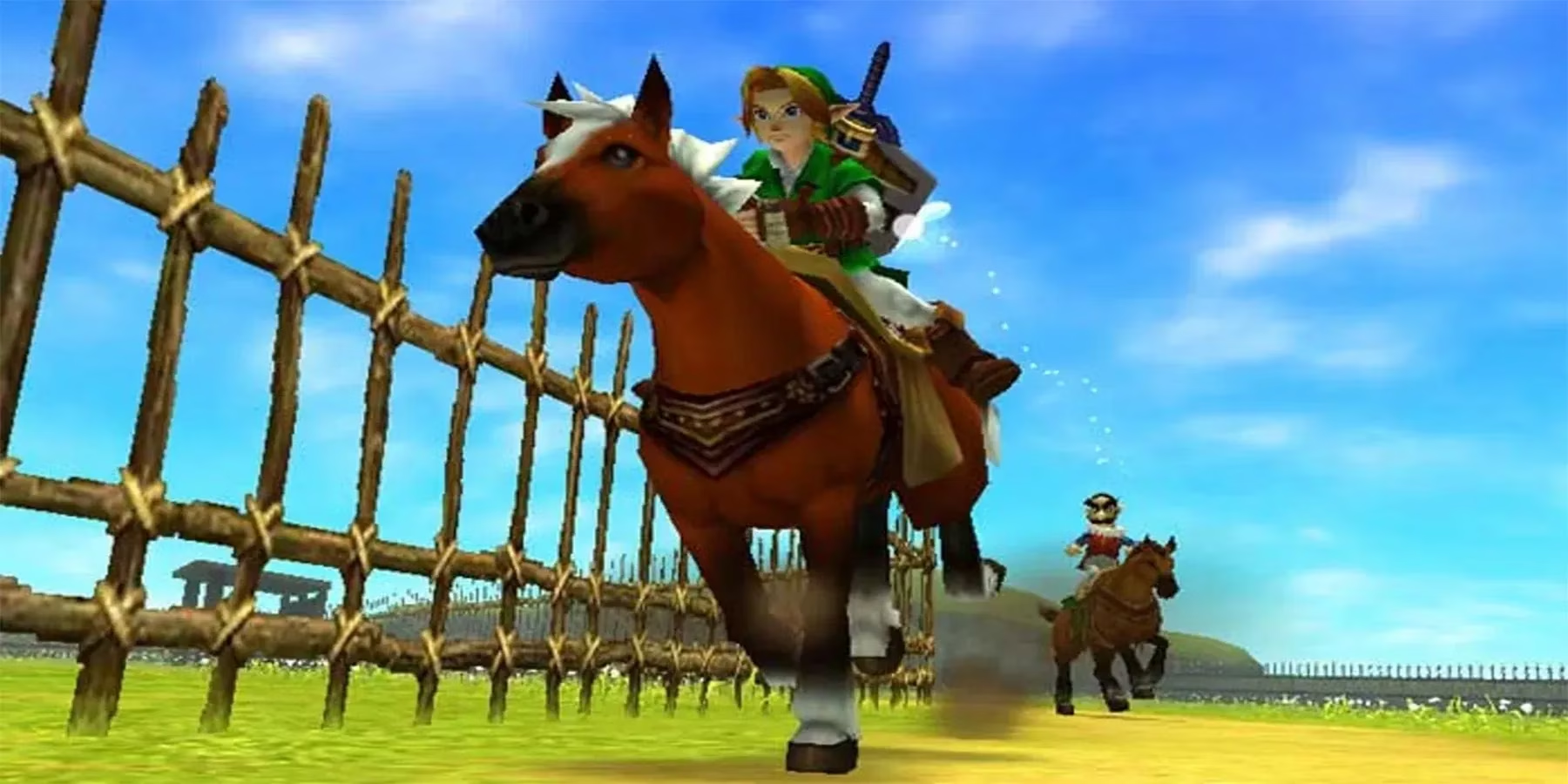
Then the industry leaped into the third dimension, and every developer faced the same daunting question: how does a legend walk into 3D without losing its soul? Ocarina of Time answered with a confidence that reverberates still. Hyrule Field unfurled like a promise, vast and alive, with a day-night cycle and dynamic music. The ocarina itself became a mechanical metaphor for time, letting Link shift between childhood and adulthood, each phase unlocking new abilities and altering the world’s state. Before open worlds became a marketing bullet point, this adventure provided the template for games like Fable, showing how a fantasy epic could balance linear narrative with a sense of boundless space. Its dungeon bosses remain etched in memory, and its influence on the dark, time-looping sequel Majora’s Mask showed just how flexible that foundation could be.
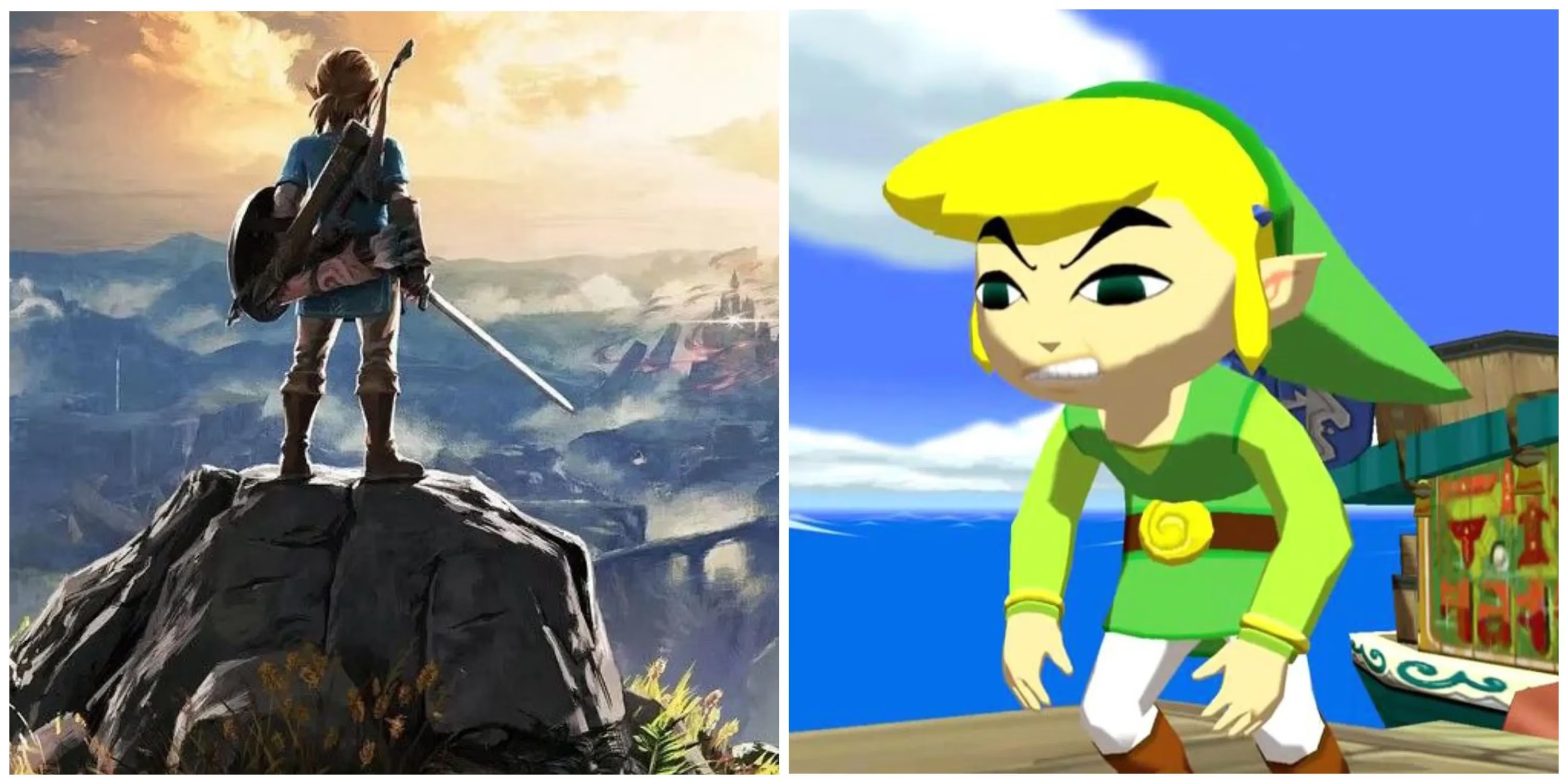
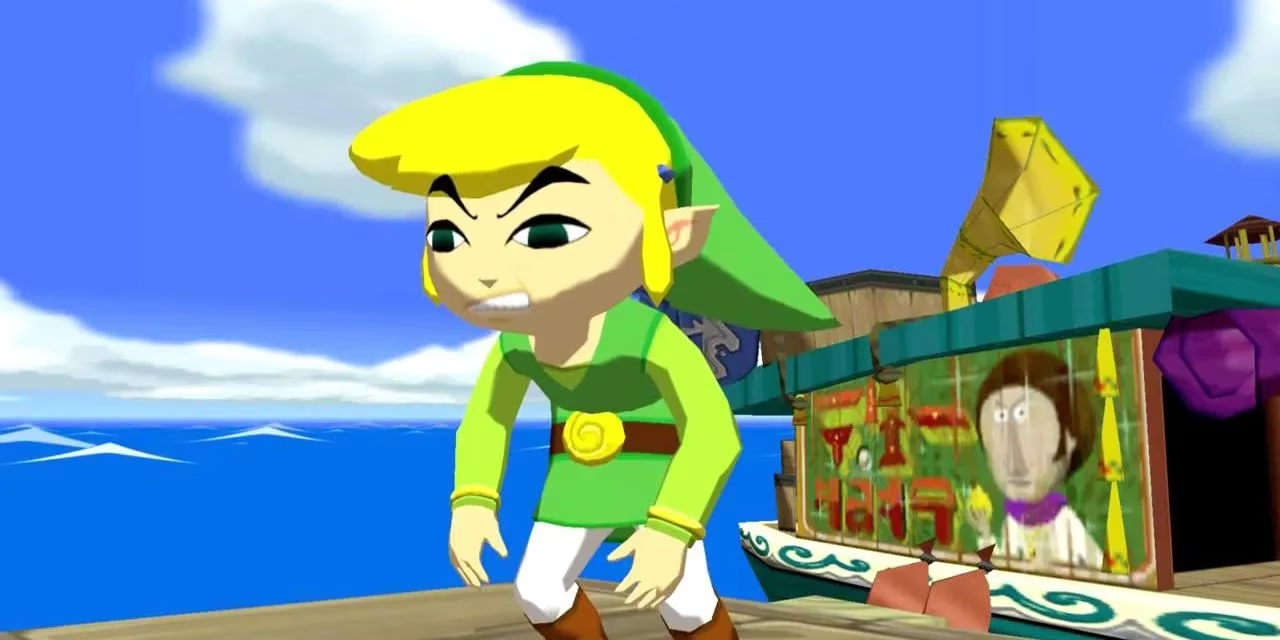
As the new millennium dawned, Nintendo faced another challenge: a new console generation demanded a visual revolution, but raw polygon counts weren’t everything. The Wind Waker sailed into view with a cel-shaded art style that defied the gritty realism trend. At first, some fans raised eyebrows, but time—ironically—healed all doubts. The game’s expressive characters, sun-drenched seas, and fluid animation proved that style outlasts technical specs. The HD remaster on the Wii U, and later on the Switch in 2025, made a game from 2002 look almost pristine. Link’s ocean voyage wasn’t just about hopping between islands; it was a story of growing up, letting go, and a world drowning in the shadows of a forgotten kingdom. Could anyone have guessed that a cartoonish seafarer would teach the industry a lasting lesson about artistic identity?
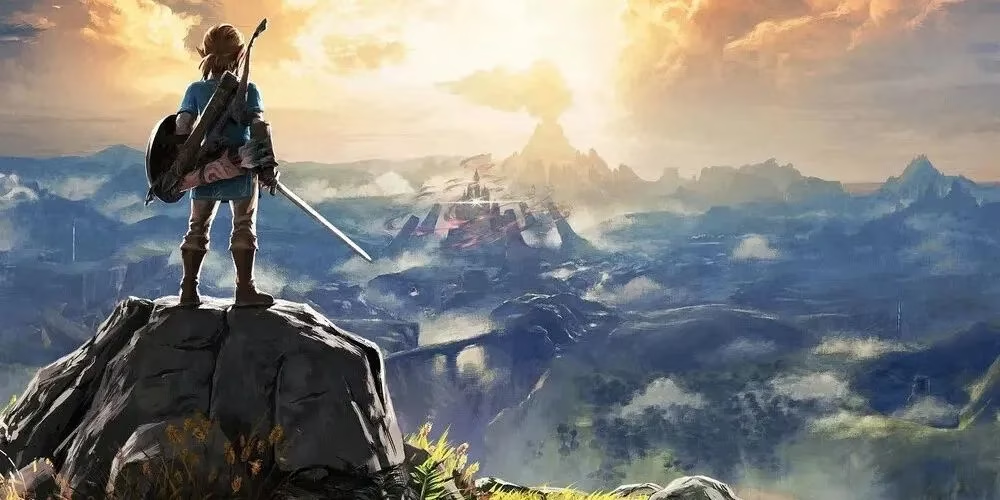
Then came 2017, and Breath of the Wild did not merely iterate—it ripped up the rulebook. After decades of hand-holding and map icons that guided every step, this version of Hyrule set players free. The Great Plateau served as a pressure cooker of physics and chemistry, letting Link climb, glide, and set grass ablaze with emergent logic. For the first time in a major open-world game, the horizon was the only quest marker. Curiosity drove exploration, not a checklist. The shrines and divine beasts replaced traditional dungeons with bite-sized experiments, and the result was pure sandbox joy. In 2026, its approach is still studied, still envied. How could a game this unconventional become one of the best-selling titles in the series? The answer lay in trust—trust that a player’s own stories would be more powerful than any scripted event.
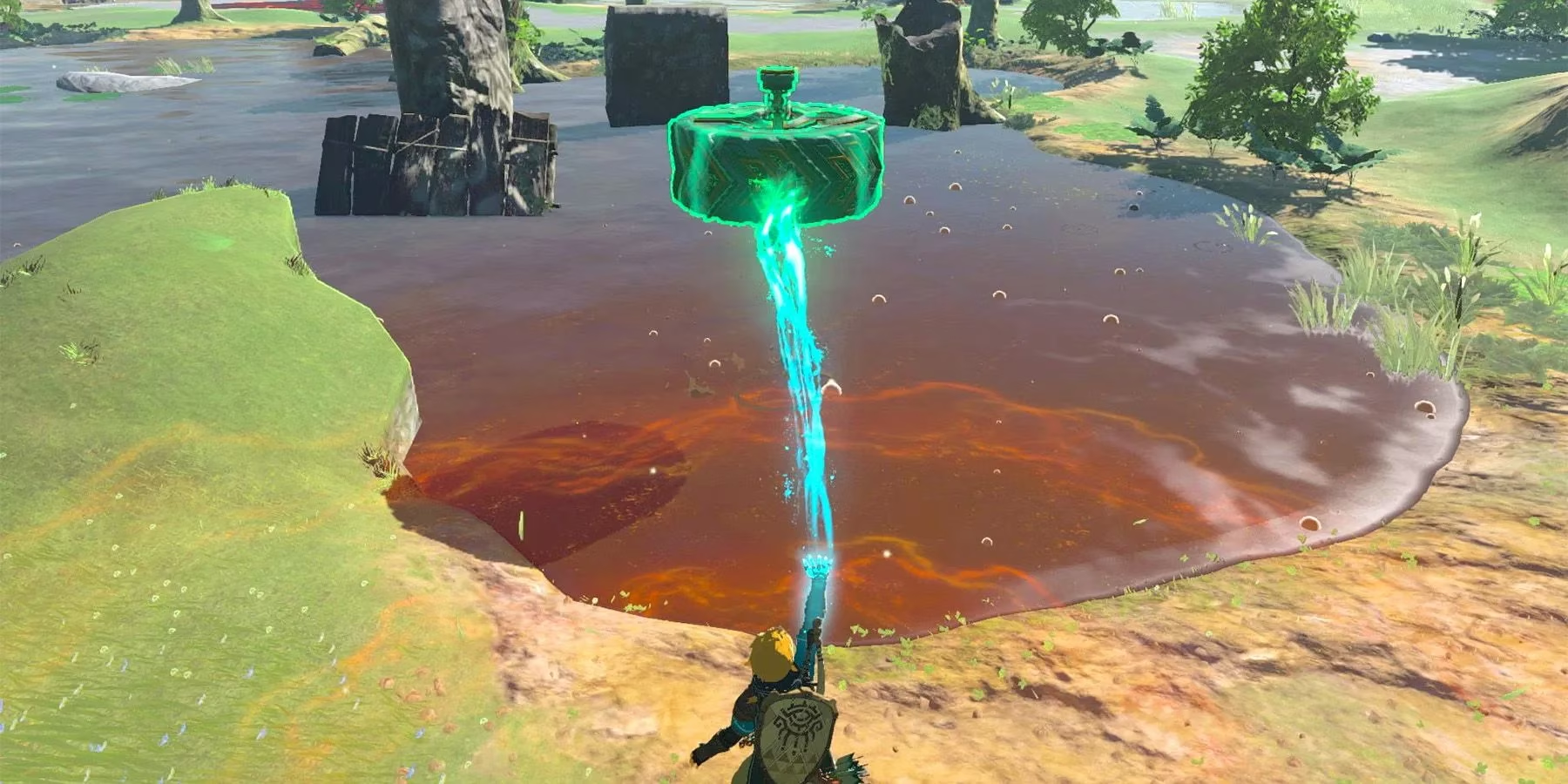
When Tears of the Kingdom was announced to reuse Hyrule’s map, skepticism bubbled up. Could lightning strike twice on the same ground? The answer burst forth with the Zonai runes, especially Ultrahand. This ability let players fuse objects into vehicles, contraptions, and even torturous combat machines with a freedom bordering on engineering software. The sky islands opened a new vertical layer, and the chasms plunged into an eerie abyss that doubled the explorable space. Every puzzle now had a dozen creative solutions—no wrong way, only the player’s imagination as the limit. In a 2026 retrospective, it’s clear that Tears of the Kingdom didn’t just replicate success; it amplified the core truth of Zelda: the joy lies in the making, not just the finding. Who would have predicted that a Link with a construction kit would redefine player agency yet again?
Reflecting on these milestones, one sees a pattern of courage. Every era of Zelda faced the risk of obsolescence—the jump to 3D, the embrace of a cartoon aesthetic, the destruction of open-world tropes—and each time, Nintendo chose to pioneer rather than follow. The series’ legacy isn’t just in sales figures or review scores; it’s in the countless developers who learned from its playbook and the players who carry its sense of wonder into their own dreams. In 2026, as new entries are undoubtedly on the horizon, the question isn’t whether The Legend of Zelda will innovate again, but what boundary it will shatter next.