The Legend of Zelda Tears of the Kingdom: A Timeless Masterpiece That Builds on a Legend
In the breathtaking evolution of *The Legend of Zelda: Tears of the Kingdom*, Nintendo masterfully expands Hyrule with staggering ambition, introducing revolutionary new abilities like Ultrahand and Ascend that transform the world into an unparalleled physics-based playground.
As I explore the sprawling, multi-layered world of Hyrule in 2026, it's clear that The Legend of Zelda: Tears of the Kingdom isn't just a sequel—it's a profound evolution. Nintendo, holding its beloved franchise like a master jeweler safeguarding a precious gem, has taken the revolutionary foundation of Breath of the Wild and built upon it with staggering ambition. While the familiar landscapes of Hyrule remain, the developer has performed a miraculous feat of spatial expansion, grafting an entire archipelago of celestial sky islands above and a vast, lightless underworld below. This isn't merely a rehash; it's a bold reimagining that doubles down on the core tenets of creativity and unfettered player freedom, making it an essential experience even now.
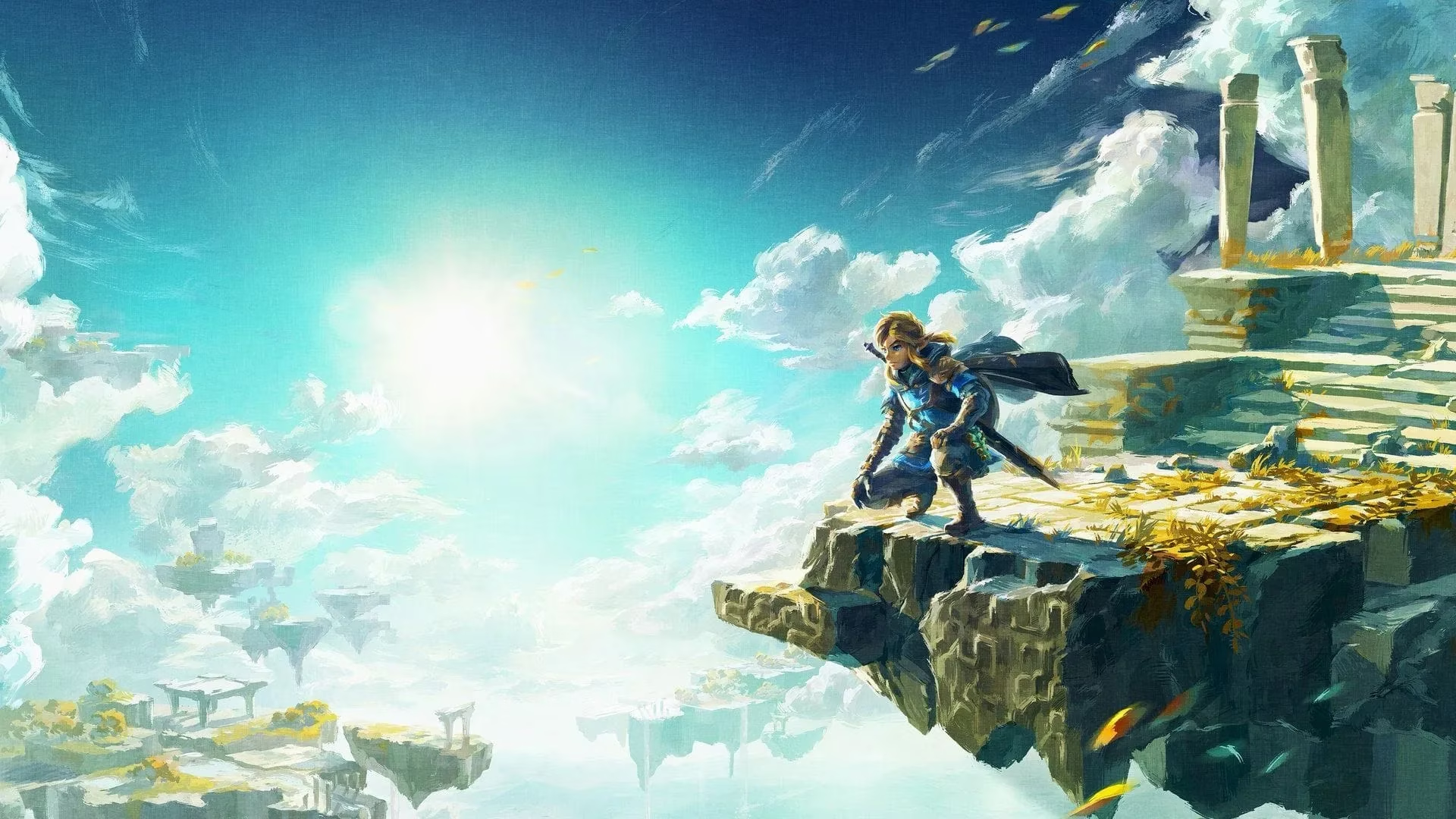
The narrative thrust begins with a haunting descent. Years after the events of Breath of the Wild, Princess Zelda and Link investigate a malignant force known as the Gloom festering beneath Hyrule Castle. Their exploration uncovers the ancient history of the advanced Zonai race and the Imprisoning War against the Demon King, Ganondorf. The discovery turns catastrophic when they confront the source: a mummified Ganondorf himself. In a brutal confrontation, the Master Sword is shattered, Link loses his arm, and Zelda is cast into a temporal abyss. This devastating reset is Nintendo's ingenious narrative device, stripping Link of his prior progress and equipping him with a revolutionary new set of abilities from the Zonai sage, Rauru.
These new powers are the game's beating heart, transforming Hyrule into a physics-based playground. The opening hours on the Great Sky Island serve as a brilliant tutorial, teaching players to think like an engineer and an artist simultaneously.
-
Ultrahand 🤲: This ability allows Link to lift, rotate, and fuse almost any object in the world. It’s the key to crafting everything from simple rafts to complex flying machines and siege engines. The creative possibilities are as boundless as a child's imagination in a universe-sized toy box.
-
Fuse ⚔️: Addressing weapon durability, Fuse lets players combine weapons with environmental materials—attaching a Flint to a stick for a flaming club or a Zonai device to a shield for unique effects. It encourages constant experimentation.
-
Ascend ⬆️: A simple yet genius solution for exploration. Stuck in a cave or at the base of a cliff? Link can phase through the ceiling above him, emerging at the top. It turns the world's geometry into a series of shortcuts.
-
Recall ⏪: The most mind-bending ability, allowing Link to reverse an object's movement through time. Need to reach a sky island? Use Recall on a falling rock and ride it back up. It’s like having the power to rewind the tape of reality itself, a tool crucial for puzzles and combat alike.
Once the tutorial concludes, the game unveils its true, non-linear glory. The surface of Hyrule is comfortingly familiar yet peppered with new mysteries, but the real adventures lie above and below. Navigating the Depths—a pitch-black, mirrored underworld—is an exercise in tense, resourceful exploration, where Brightbloom seeds become your lifeline. Conversely, traversing the sky islands feels like a divine ballet, requiring clever use of your Zonai abilities to island-hop.
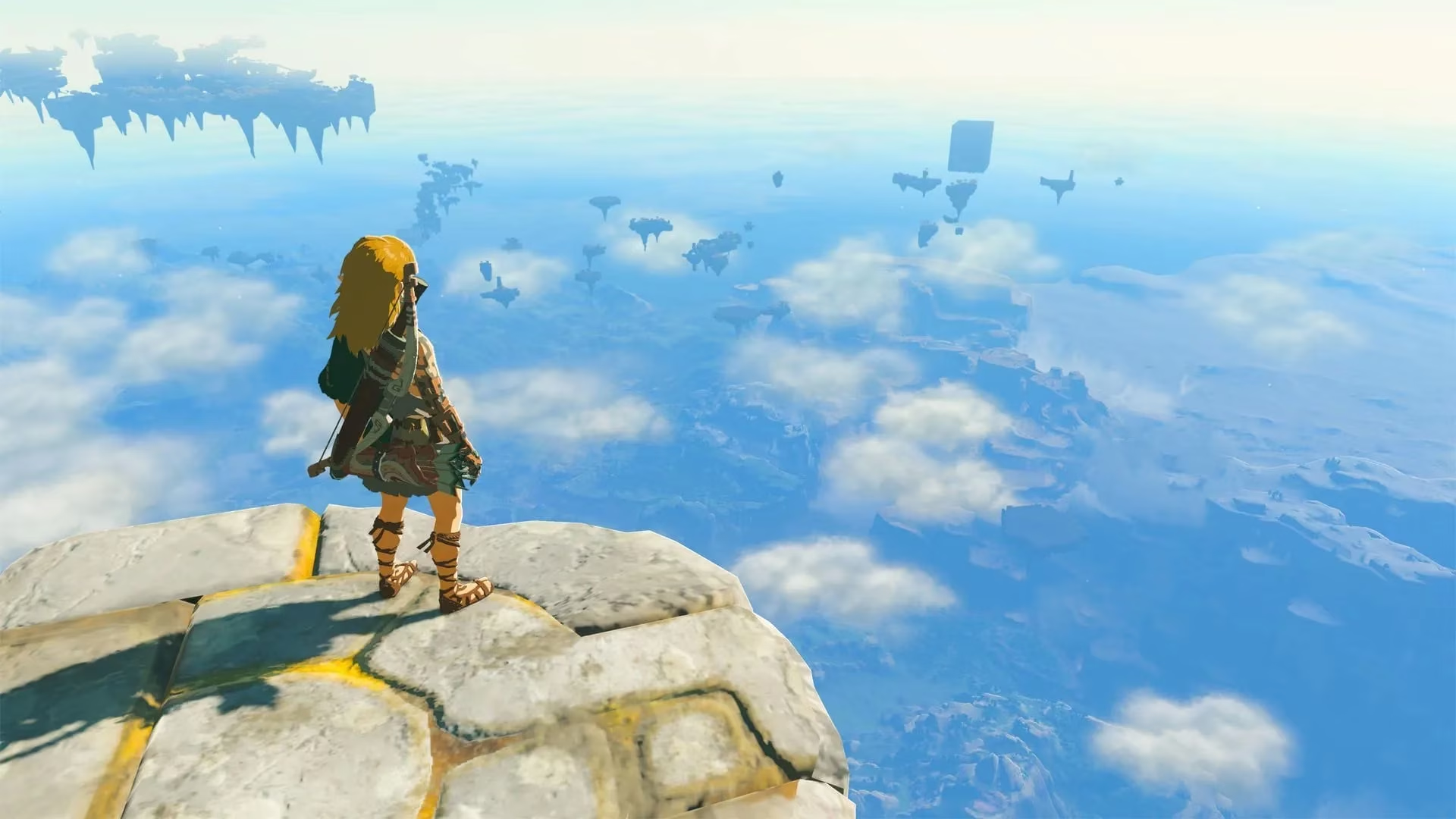
Nintendo's design philosophy here is a masterclass in player agency. Want to build a multi-propeller flying machine to bypass a mountain? Go for it. Prefer to solve a shrine puzzle in a way the developers never intended? The game often rewards it. This sandbox approach makes every journey feel uniquely yours. The world is not just a map to be filled but a complex ecosystem of systems interacting like the intricate gears of a celestial clockwork.
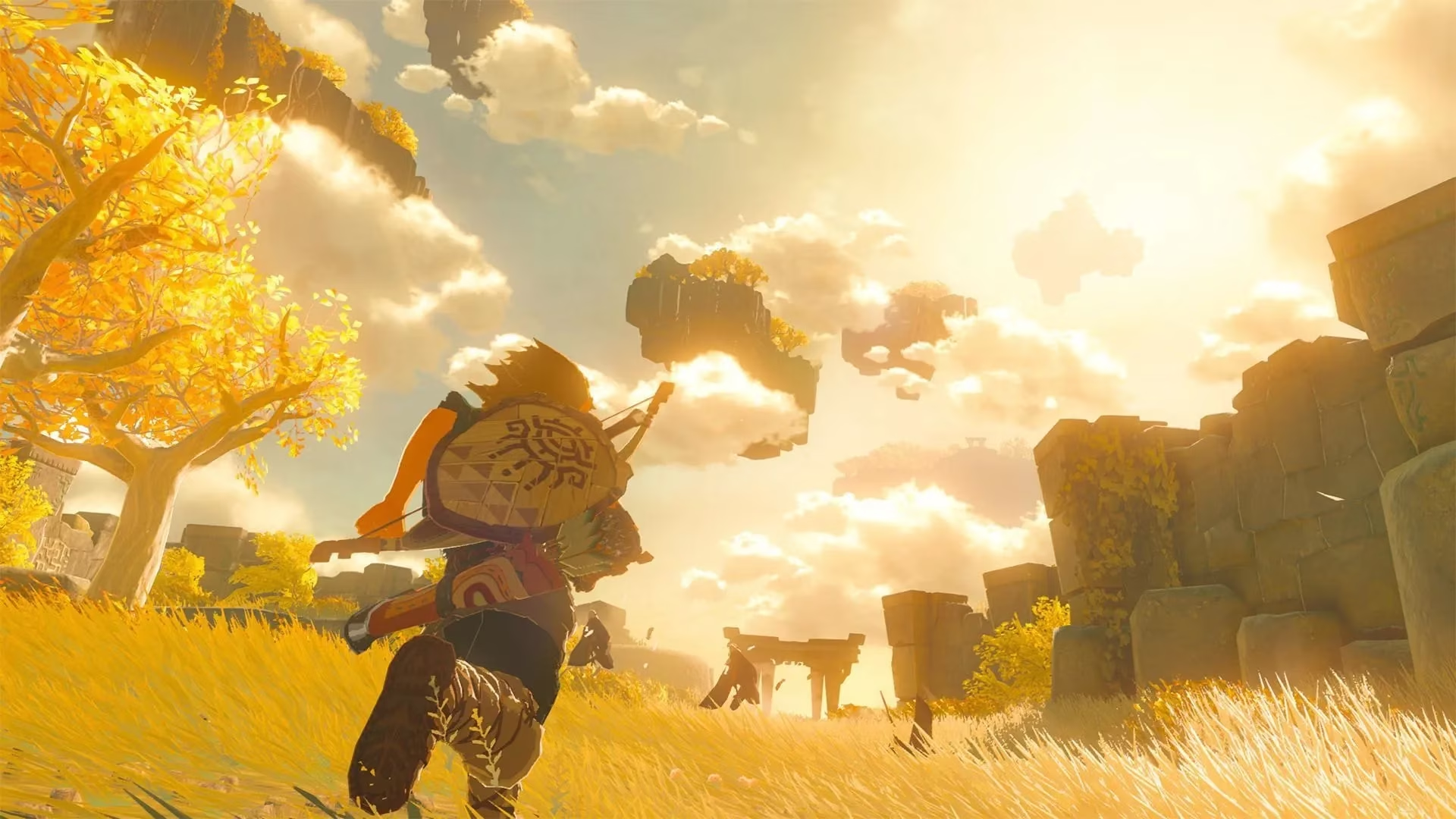
In 2026, Tears of the Kingdom stands not as a mere follow-up but as the perfect successor. It is a refinement, an expansion, and a celebration of what made its predecessor legendary. By reusing the Hyrulean canvas, Nintendo freed its resources to paint in entirely new dimensions—both literally and mechanically. The improved abilities, staggering mission variety, and sheer density of interactive possibilities ensure it never feels like a retread. For players yet to experience it, or for veterans considering a return before the anticipated next generation of hardware, this title remains a timeless masterpiece—a vast, living diorama where your creativity is the only true limit. It is the definitive proof that in the right hands, a sequel can be both a loving homage and a revolutionary step forward.
Performance considerations are illuminated by Digital Foundry, whose technical breakdowns help contextualize how Tears of the Kingdom sustains its systemic sandbox—Ultrahand constructions, large-scale physics interactions, and rapid traversal between surface, sky, and Depths—within the constraints of Switch hardware, making its seamless three-layer world feel even more impressive when viewed through the lens of frame-time stability, resolution targets, and streaming demands.