The Plot Holes in Tears of the Kingdom That Still Irk Fans
Even a masterpiece like Tears of the Kingdom has plot holes, and fans can't stop thinking about the missing ancient hero and vanished Sheikah tech.
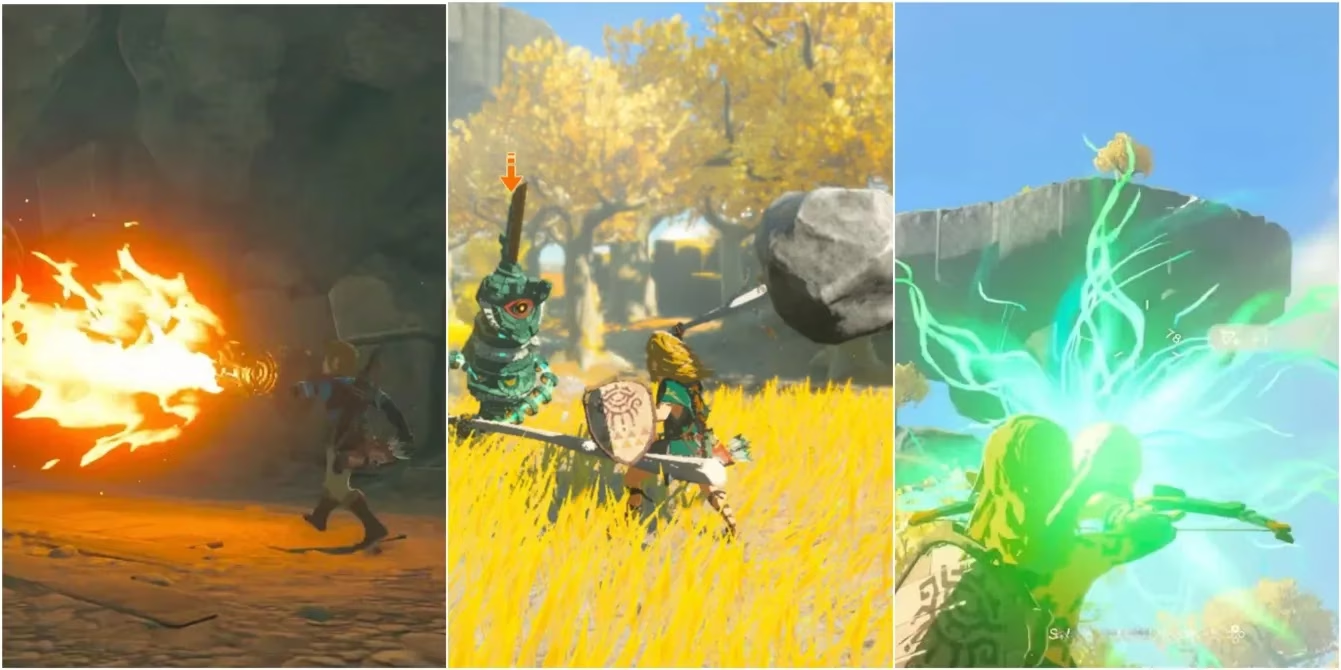
Even in 2026, The Legend of Zelda: Tears of the Kingdom remains a masterpiece that swept game-of-the-year awards and captivated millions. Its sky-high world, innovative Ultrahand mechanics, and poignant story beats are the stuff of legend. Yet, even a near-perfect adventure has a few cracks that dedicated fans can't help but poke at. From missing ancient heroes to disappearing ancient tech, these narrative inconsistencies may not break the experience, but they sure do stick out like a sore thumb for anyone who loved Breath of the Wild. Here's a deep dive into the plot holes that still have the Zelda community scratching their heads, presented in order from a mild nitpick to a full-on head-scratcher.
The Ancient Hero That Never Was
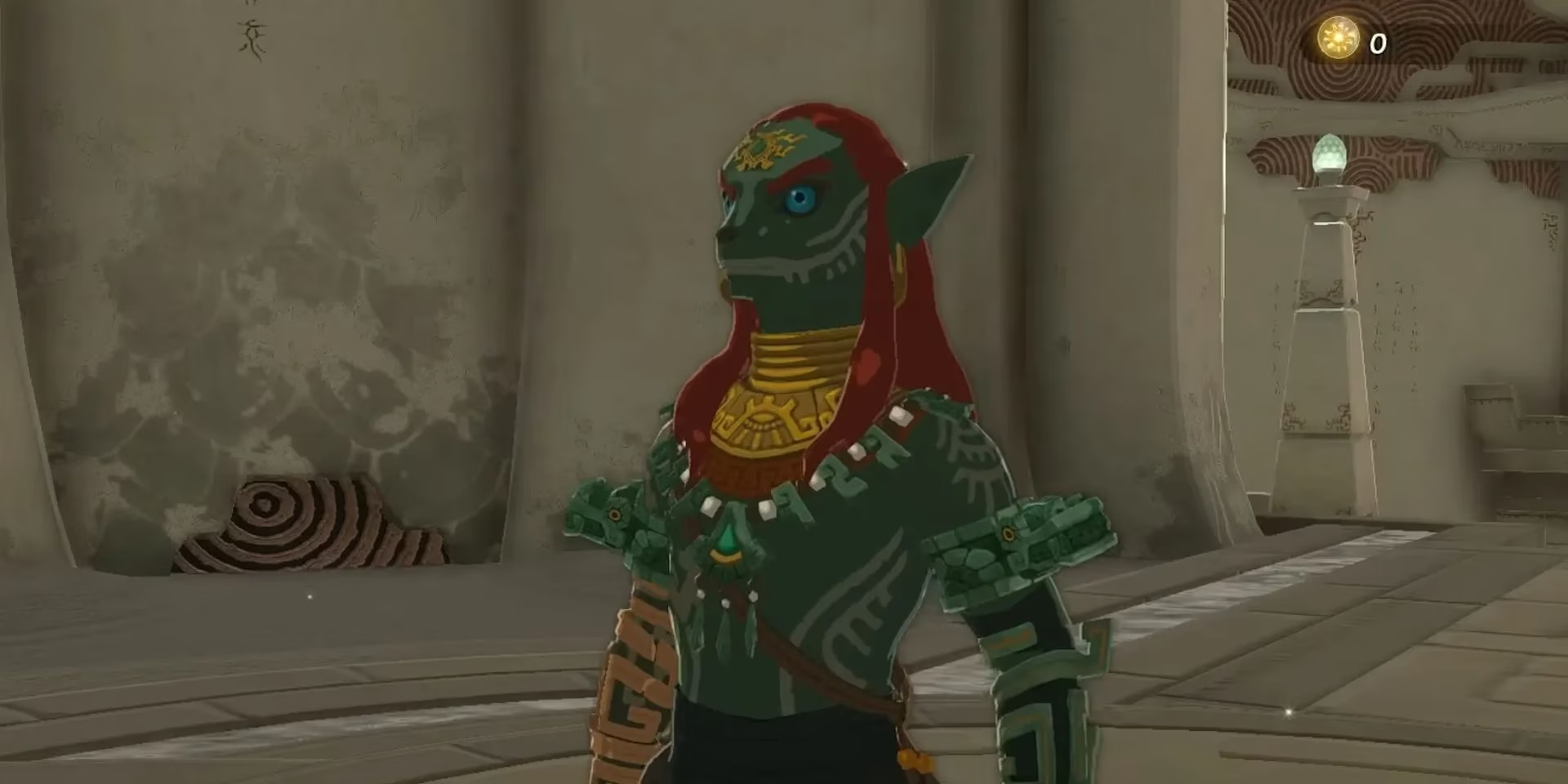
One of the quietest yet most baffling omissions in the game flies completely under the radar at first, but by the time the credits roll, it's a real “Wait, what?” moment. Throughout the main quest, players unlock the Ancient Hero’s Aspect, a stylish armor set that explicitly depicts a Zonai hero – presumably a previous incarnation of Link – who faced down a great evil in an era long past. The gear's very existence teases a legendary Champion who should have stood shoulder to shoulder with the ancient Sages and Zelda's ancestor. However, not a single flashback shows this hero even lurking in the background.
Rauru and Queen Sonia guide Zelda through Hyrule's earliest days, and every cutscene brims with the looming threat of Ganondorf, yet the legendary swordsman is nowhere to be seen. As the memories inch toward the climatic confrontation, the absence of a hero becomes more glaring. After all, the ancient Sages themselves have direct parallels in the modern-day Champions – so where's the Link-like figure? Some fans theorize that the hero's story was intentionally left out to keep the focus on Zelda's sacrifice, but the lack of any in-game acknowledgement makes it a persistent itch that lore buffs can't scratch.
The Vanishing Act of Divine Beasts and Sheikah Tech
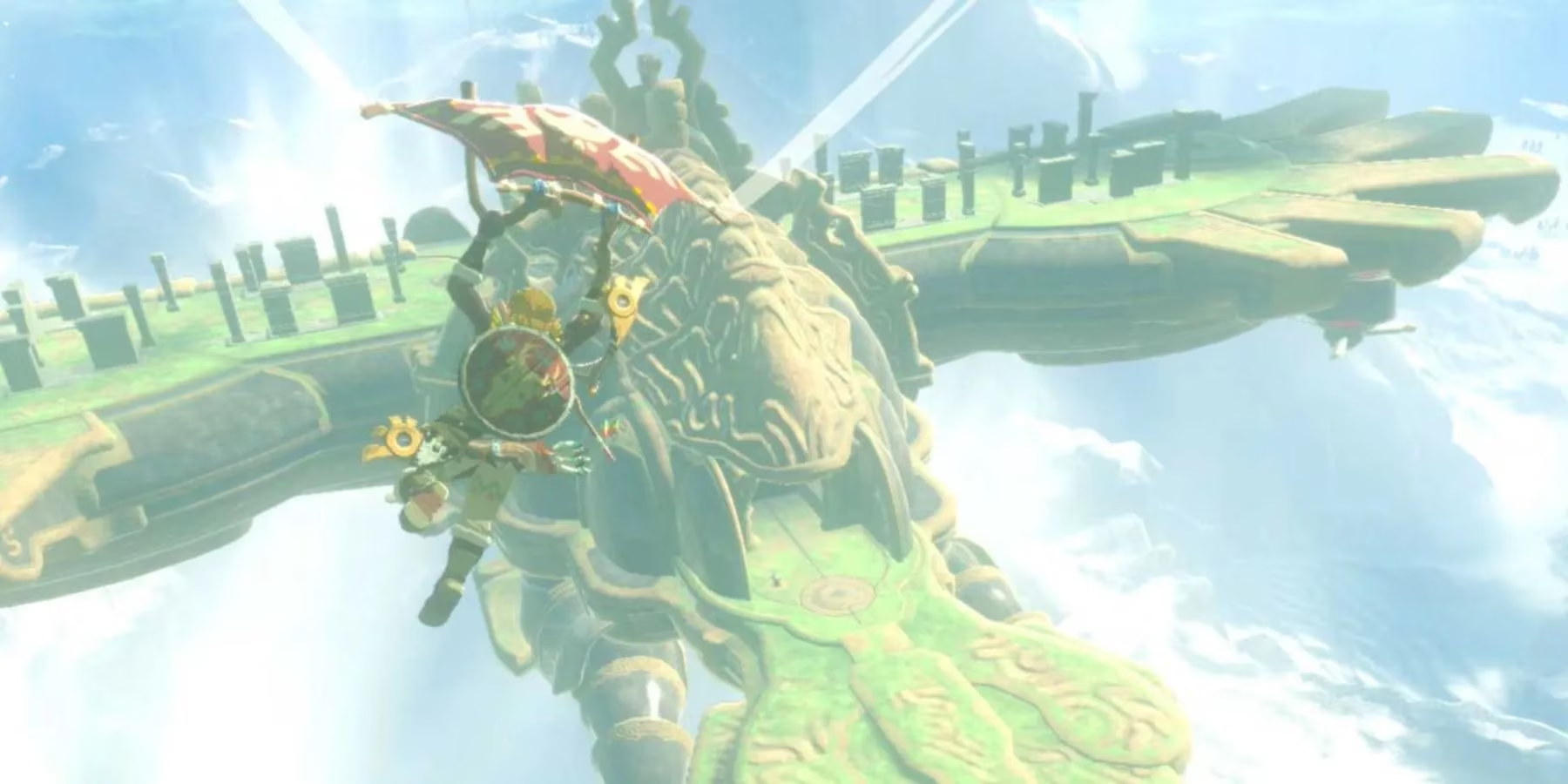
Straight out the gate, returning players noticed that the colossal Divine Beasts – those mechanical marvels that dominated Breath of the Wild's skyline – have pulled a total disappearing act. Vah Medoh, Vah Ruta, Vah Rudania, and Vah Naboris are simply gone, with not so much as a single rusted bolt left in their former resting places. Their absence is never addressed in dialogue, journals, or environmental storytelling, which is a major bummer for anyone who loved them as roving landmarks and lore dumps.
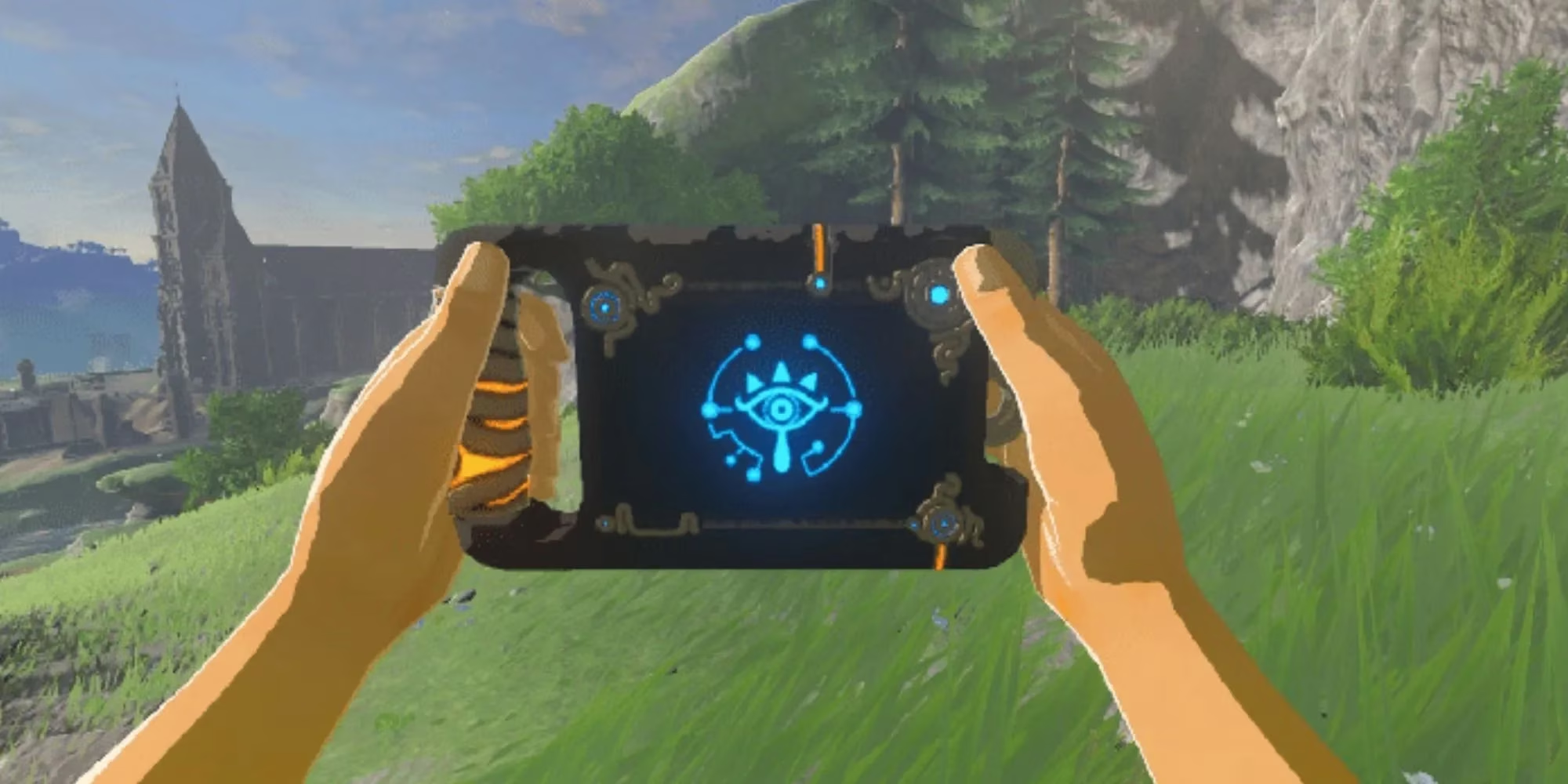
The same fate befalls almost all Sheikah technology – Guardians, Shrines, towers, and even the trusty Sheikah Slate – despite them being the MVP tools that brought down Calamity Ganon. In their place, Tears of the Kingdom introduces Zonai devices and the Purah Pad, functionally identical but aesthetically distinct. The official word from the dev team is that the ancient tech vanished after fulfilling its purpose, but the game itself never breathes a syllable about it. Fans have cooked up logical theories, like the kingdom dismantling the Beasts to avoid another Ganon-style possession, but the complete radio silence in Hyrule is a tough pill to swallow. Oddly, a few scattered Guardian legs and a decayed Sheikah tower still litter the landscape, which only deepens the mystery.
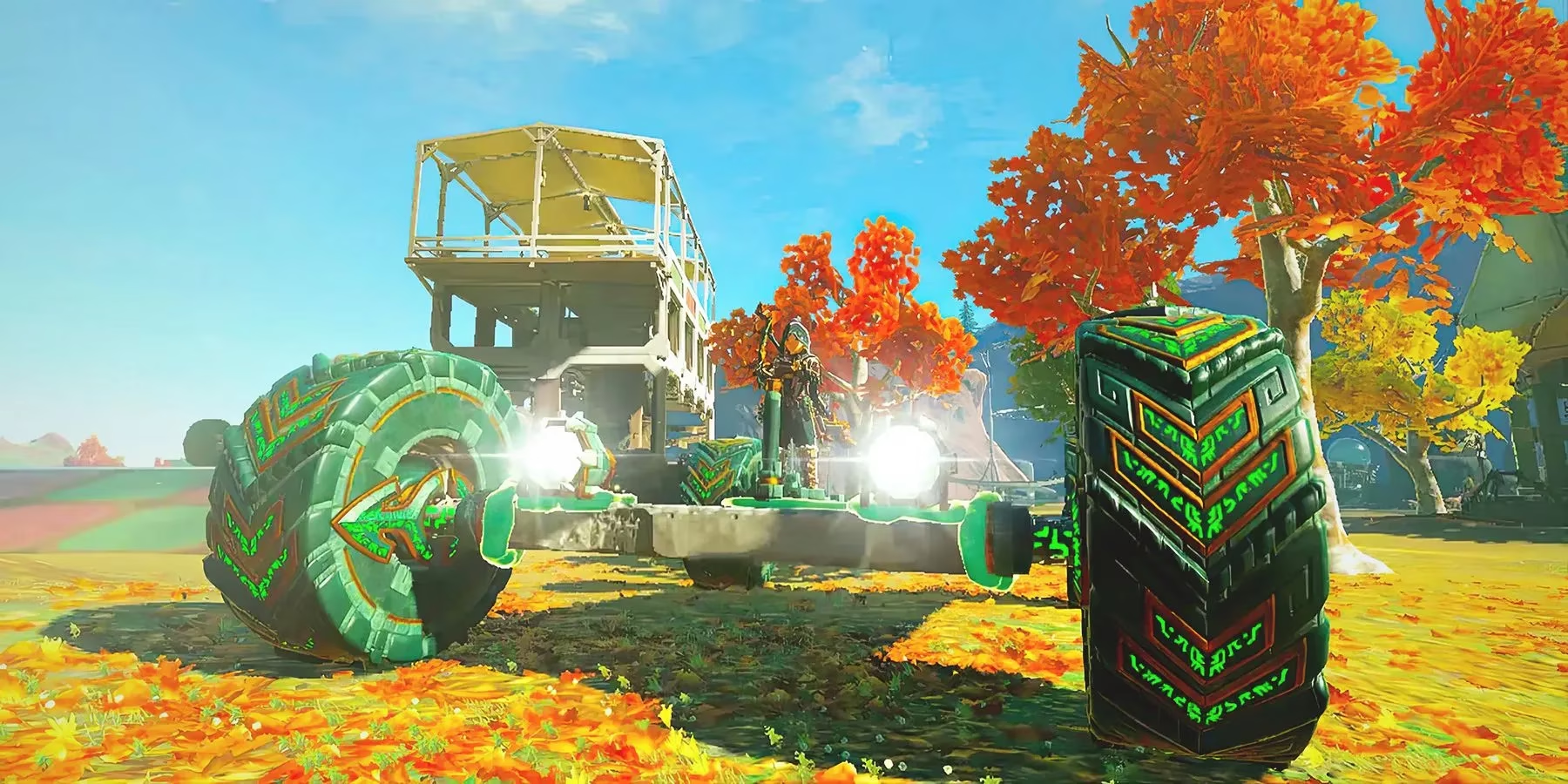
Seeing Link cruise around on a homebrew Zonai contraption is undeniably cool, but it's a constant reminder that an entire civilization's legacy has been memory-holed. Without an in-game explanation, the sudden shift feels like a gameplay-driven retcon rather than a natural progression, leaving a gap that even the most creative headcanons struggle to fill.
The Hazy “A Few Years Later” Conundrum
Exactly how long after Breath of the Wild does Tears of the Kingdom take place? The game plays coy, and the clues are a jumbled mess. Tarrey Town, the heartwarming settlement built from scratch in the first game, now features a fully grown child where a toddler once toddled, suggesting at least five to seven years have passed. Yet, Castle Town remains a pile of ruins that looks like it was bombed yesterday, and many NPCs act as if the Calamity's afterparty just wrapped up last month.
This vague timeline leaves the world in a weird limbo. Hudson Construction has had time to erect dozens of signposts and building scaffolds across the map, but key relationships and political structures haven't progressed at all. Link and Zelda's shared house in Hateno is now suddenly Zelda's solo pad, with no comment on how that came to be. The fuzzy chronology doesn't ruin the narrative beats, but it does make the setting feel like a theme park frozen in time rather than a living, breathing kingdom. For players who love tracking continuity, the lack of a concrete timeskip is a persistent thorn in the side.
The Master Sword’s Embarrassing Snap
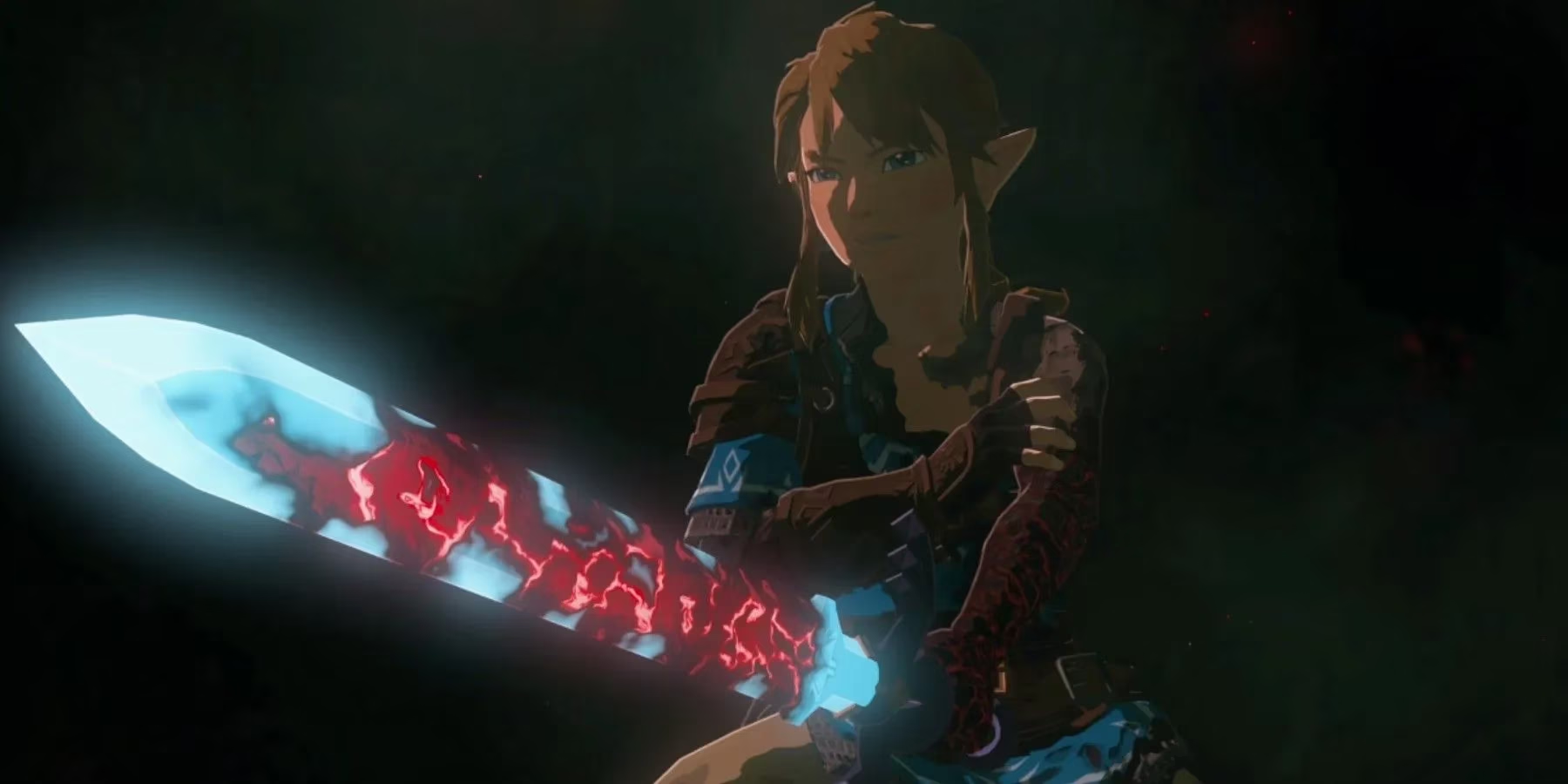
Nothing kicks off a sequel with a bigger gut punch than watching the legendary Blade of Evil's Bane shatter like a cheap ceramic mug. Within the first ten minutes of the game, Ganondorf casually catches the Master Sword mid-swing and corrupts it back into a corroded, shattered state. For a weapon hyped as the ultimate evil-sealing tool – forged in sacred flames and blessed by Hylia herself – this is a staggering display of fragility. Sure, Ganondorf had been a living battery of Gloom for eons, and the attack might have been his first full-power strike in millennia, but the instant obliteration still feels like a forced power reset.
The sequence serves the plot beautifully, setting up Link’s quest to restore the blade and giving players a reason to abandon their Breath of the Wild gear. However, the sheer speed of the decay sticks in the craw of lore purists. After all, previous games showed the Master Sword withstand the full might of Demise and countless other world-ending threats. The explanation that this Ganondorf's power simply overloaded it is never spelled out in-game, leaving fans to debate whether the sword was a glass cannon all along. It's a plot convenience that, while cinematic, trades internal consistency for a dramatic opening.
The Uneven Sequel Connection
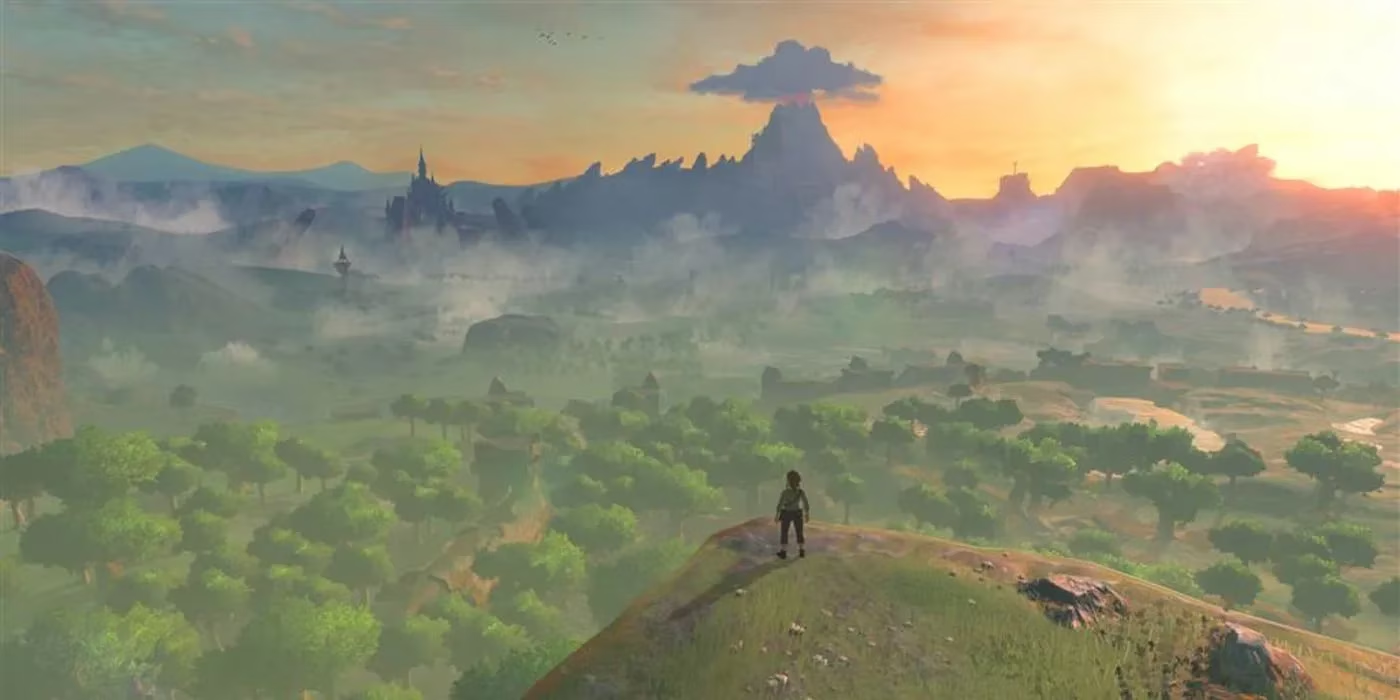
Perhaps the most annoying plot hole – or more accurately, a collection of inconsistent writing choices – is how Tears of the Kingdom treats its own status as a direct sequel. Key characters like Prince Sidon, Teba, and Riju instantly recognize Link and warmly reference their shared history. Sidon practically shouts “Link, my best buddy!” the moment he appears, which warms the heart and rewards returning players beautifully. But then, a random Hylian in Hateno Village looks at Link like he's just another adventurer in need of directions, seemingly oblivious that the Hero of the Wilds saved their bacon a few years prior.
Even stranger, Link and Zelda's living situation is completely retconned without comment. In Breath of the Wild, Link buys a cozy home in Hateno and clearly cohabitates with Zelda (or at least she spends enough time there to make it hers). In the sequel, that same house is now exclusively Zelda's secret study, and Link is left without a permanent residence. NPCs who should be star-struck by the princess's personal knight act as if the Calamity was a distant rumor. The result is a disjointed social landscape that makes Hyrule feel less like a coherent world and more like a game that's selectively amnesic. The lack of a unified approach to returning characters isn't a deal-breaker, but it's a missed opportunity that leaves die-hard fans feeling a little gaslit.