The Shrines That Left Us Hanging For More
Shrines of Light in Tears of the Kingdom are masterfully designed but sometimes end too soon—here are 10 that left us wanting more.
A wise man once said that the best things in life are fleeting. But in the sprawling, sky-touched Hyrule of 2026, some things are so fleeting they barely register. We're talking, of course, about the Shrines of Light in The Legend of Zelda: Tears of the Kingdom. These bite-sized puzzle chambers, all 152 of them, are a masterclass in teaching a hero new tricks. They replaced the grand, labyrinthine dungeons of old, trading hour-long slogs for brain-teasing canapés. For the most part, it’s a winning formula—a little voilà moment before you’re catapulted back to the wilds. But sometimes, a player just gets settled in, the neurons start firing, and bam—it’s over. The fat lady has sung before she’s even cleared her throat.
It’s a classic case of being a victim of one's own success. Some of these shrines had the raw, unadulterated potential to be the stuff of legend, only to end up as a single-paragraph anecdote in Link’s adventure log. They're the appetizers that outshine the main course, leaving you to stare at an empty plate, wondering where the rest of your meal went. For every multi-stage brain-melter, there's a shrine that feels like a sneeze—a brief, intense burst of activity that leaves you slightly disoriented and wondering if that was it. Here’s a tip of the Hylian hood to ten shrines that had us screaming, "Wait, come back! I wasn't done with you!"
The Ultrahand Tease
Take the Jiosin Shrine, a classic case of "Shapes and Ladders" gone too simple. Nestled in Central Hyrule, it’s meant to be a boot camp for Link’s magical sticky arm, the Ultrahand, teaching the fine art of shape rotation. It’s the video game equivalent of a toddler’s shape-sorter toy. You know the ones: a square block goes in the square hole. A collective "Duh!" echoes from the audience. Sure, mastering Ultrahand is as vital as learning to boil water, but this shrine feels like the tutorial level of a tutorial. The game spends the next 150 hours having Link build mechs and catapults, yet here, the big challenge is fitting a cube into a cube-shaped cavity. It's a missed slam dunk; they could have at least made it a rhombus. A bit of a damp squib when you’ve already slayed a dozen Bokoblins with a homing stick-missile on the way there.
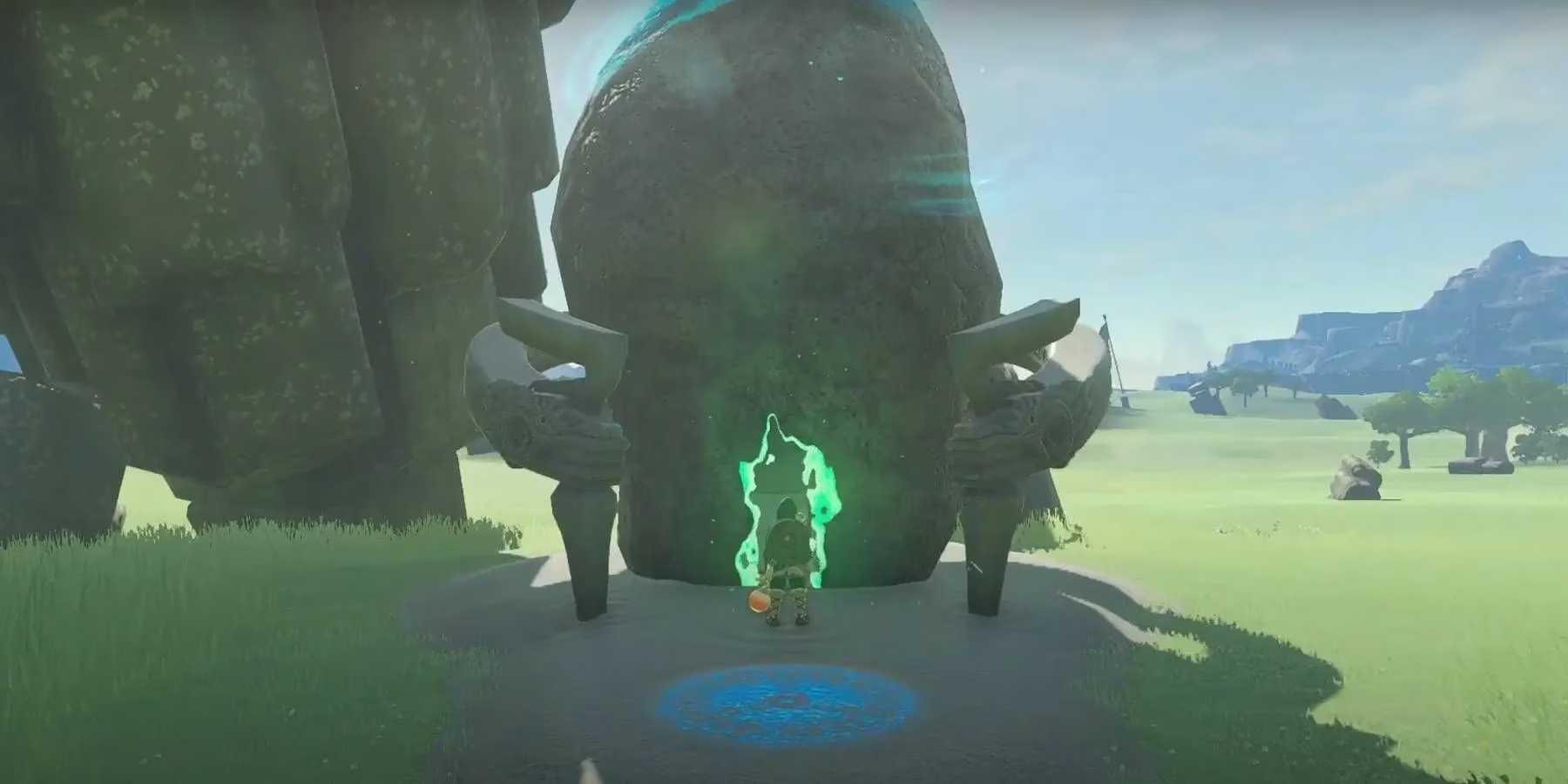
Then there was the Tajikats Shrine, which whispered sweet nothings about building with logs. The premise: "Get to the treasure chests using wood." By the time most players stumble upon this one, they've already constructed a four-wheel-drive off-roader with flaming headlights and a Korok lashed to the hood for good luck. Asking them to Frankenstein a few logs together to cross a puddle is like asking a Michelin-star chef to microwave a burrito. The concepts were already bread and butter for any aspiring Hyrule engineer. It’s a perfectly functional tutorial, but it arrives fashionably late to its own party, wearing an outfit everyone’s already seen.
The Combat College Dropout
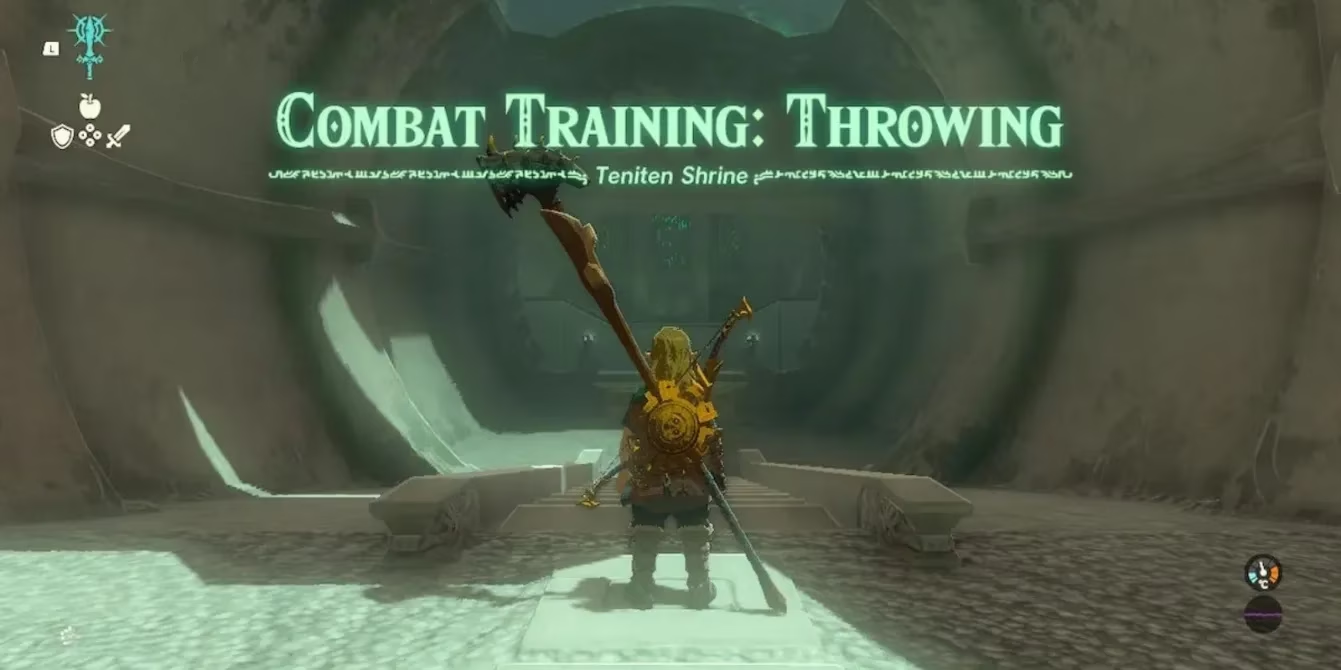
If the puzzle shrines occasionally dip their toes, the combat-centric ones often don’t even take their socks off. The Teniten Shrine has a name that sounds like a tennis tournament, but it’s really just "Combat Training: Throwing." The entire life’s lesson of this holy place is to pick up a rusty halberd and chuck it at a Zonai Construct. That’s it. Not a curveball to hit a switch, not a mid-air throw-and-recall combo, just a straightforward test of whether you’ve located the R button. This could have been a whole physics playground where the trajectory of a thrown spear creates a bridge or shatters an icy wall. Instead, it's a single act that’s more forgettable than a shopkeeper’s small talk.
Similarly, the Eshos Shrine for shield training is a straightforward affair. It tells you that a metal shield blocks fire and ignites a little hope for a complex defensive gauntlet. But it’s all over before you can say "parry." The shrine could have been a legendary short course on the shield's secret life—a quick sledding luge down a frosty peak, or a thrilling surf across a lava lake. It hints at a world of defensive possibilities but settles for a simple chemistry lesson: metal + fire = safe Link. A few more elements in the mix, and it could have cooked up something truly gourmet.
The One-Pump Chump
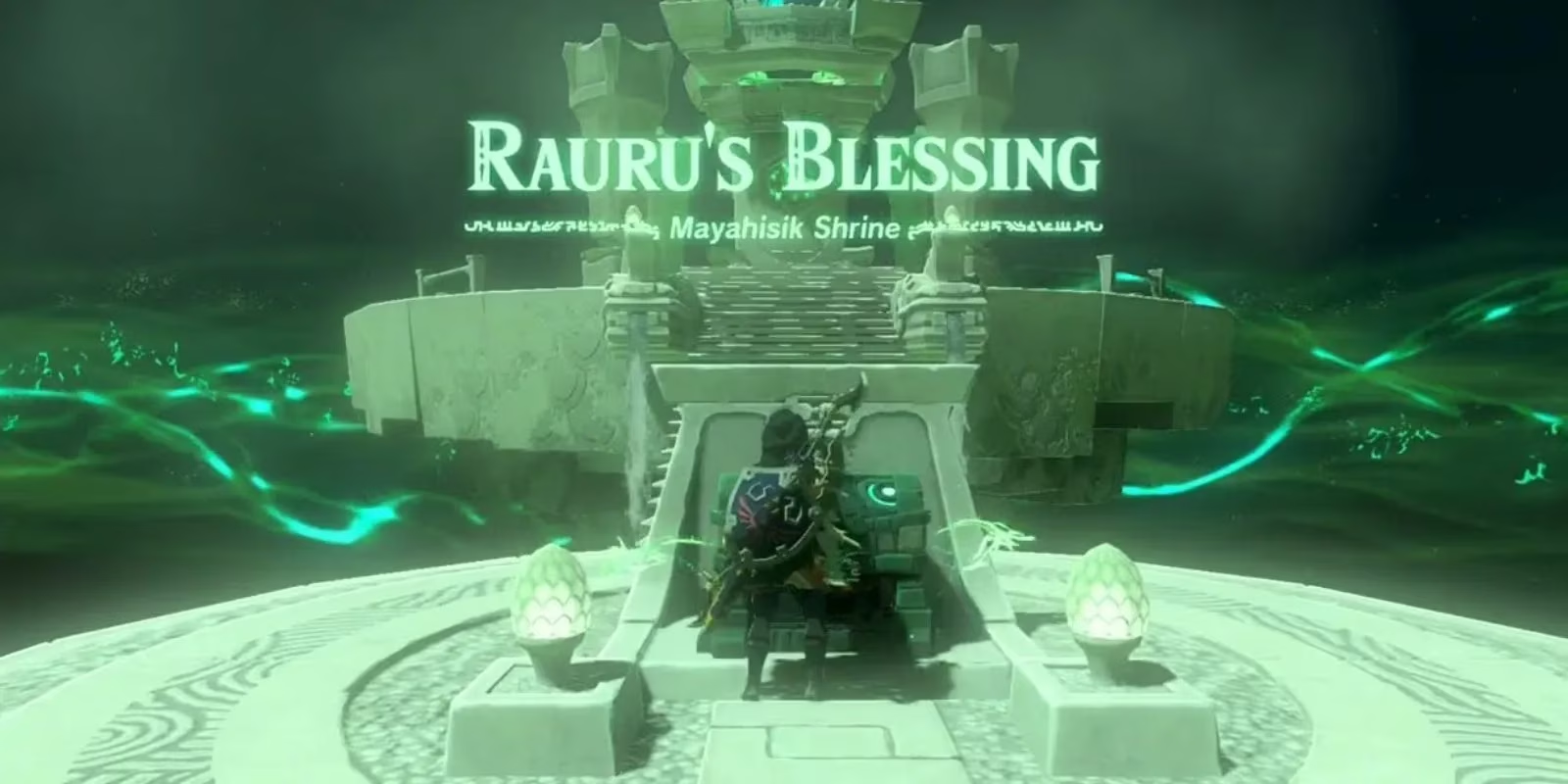
Some shrines are so bare-bones they’re practically a practical joke. The Mayahisik Shrine, located right outside the Hateno Village Research Lab, is part of a fun quest to install a Shrine Sensor on the Purah Pad. After a merry little NPC dance and some rock-breaking, Link is rewarded with… an empty room with a treasure chest. That’s it. Rauru’s Blessing, they call it. A blessing would have been a single, clever puzzle to cap off the questline. Finding a spiritually significant pile of rocks just to get a high-five from the afterlife feels less like a divine reward and more like the developers ran out of steam. It was the narrative equivalent of getting rickrolled.
Then there’s the Kyononis Shrine. "Combat Training: Dodging." Link walks in, meets a Construct, and proves he can sidestep a predictable swing. It’s as if the game suddenly got worried you’d forgotten the core mechanic of not being in the way of a sharp thing. Once Link performs a perfect dodge and triggers that glorious Flurry Rush, the spirit monk essentially pats him on the head and sends him on his way. It’s a one-trick pony show that could have been a full-blown circus, with a gauntlet of dodging spike-balls, guardian lasers, and a final face-off against a pottery army.
The Heartbreaker Hall of Fame
This is where the real tears of the kingdom are shed—for shrines that were genuinely brilliant but criminally short. The Zanmik Shrine boasts a giant ball pit. A literal. Ball. Pit. The intended puzzle is to build a scoop mechanism to carry balls up a conveyor. But in a classic "work smarter, not harder" move, any savvy player just sticks a ball directly to the rotating wheel with Ultrahand. The concept is screaming for a multi-level Rube Goldberg machine, a pinball spectacle of cascading spheres. Instead, it’s a clever idea that’s bypassed by a loophole the size of a Hinox. So many balls, so little time.
The Mogisari Shrine, or “Courage to Jump,” is a victim of its own brilliance. Getting there is a Herculean feat of platforming, but the inside is a pure, unadulterated adrenaline rush: a low-gravity vehicular obstacle course over lava and lasers, ending with a massive rocket-propelled ramp jump. It’s the Halo Warthog Run in microcosm, an exhilarating sprint that’s over in a single breathless minute. Players wanted a rally circuit, a whole movie’s worth of high-speed stunts. What they got was a teaser trailer so good it retroactively ruined the main event.
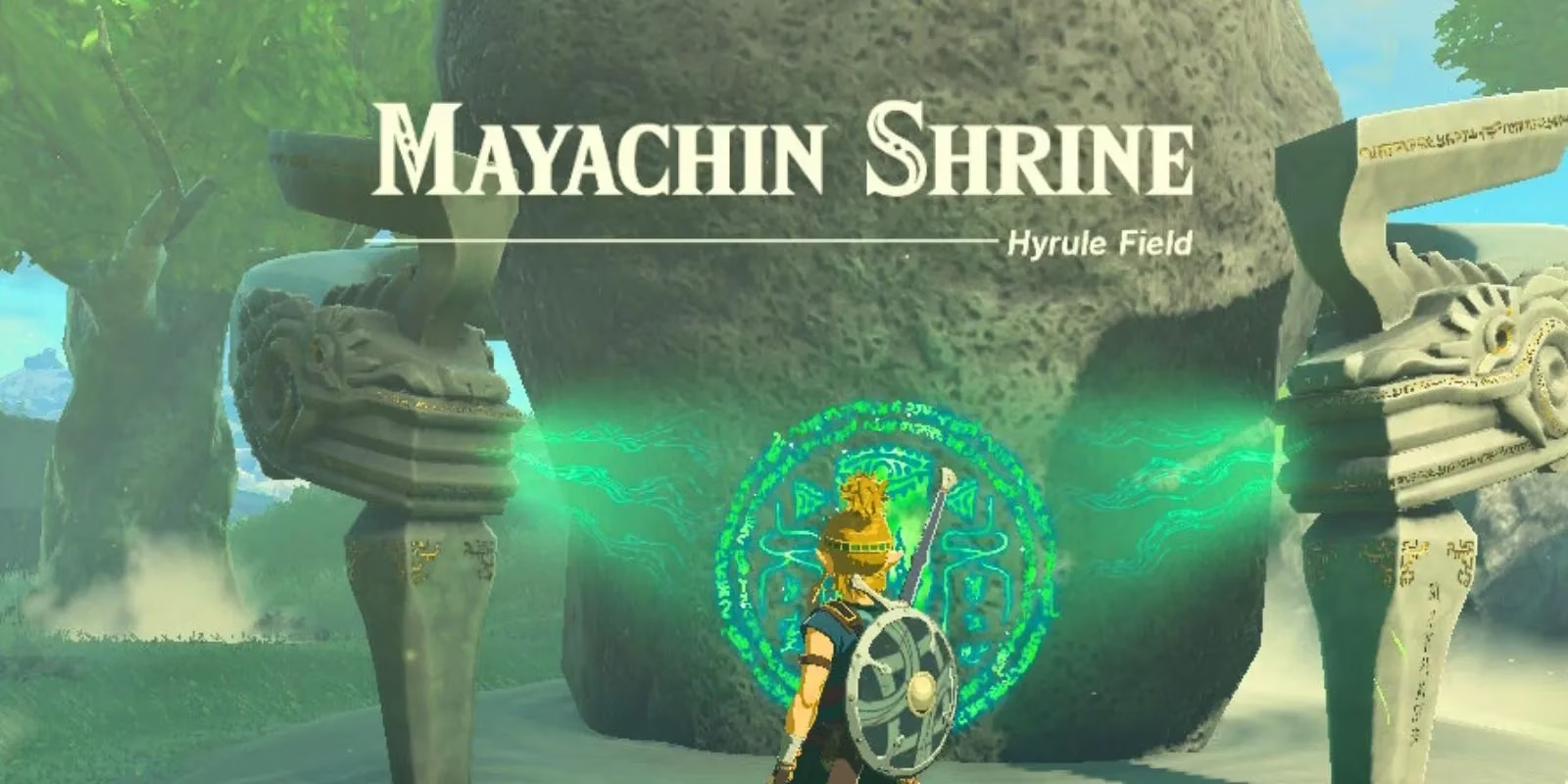
And finally, the duo that truly broke hearts. The Mayachin Shrine, “A Fixed Device,” introduced stakes to build a makeshift pinball flipper to hit a target. Twice. You do it exactly twice. It’s a perfect marriage of Zelda and arcade gaming, a delightful bit of Hylian tee-ball. This mechanic could have powered an entire dungeon, yet it’s locked away in a shrine that’s over faster than a free sample at a Goron City deli.
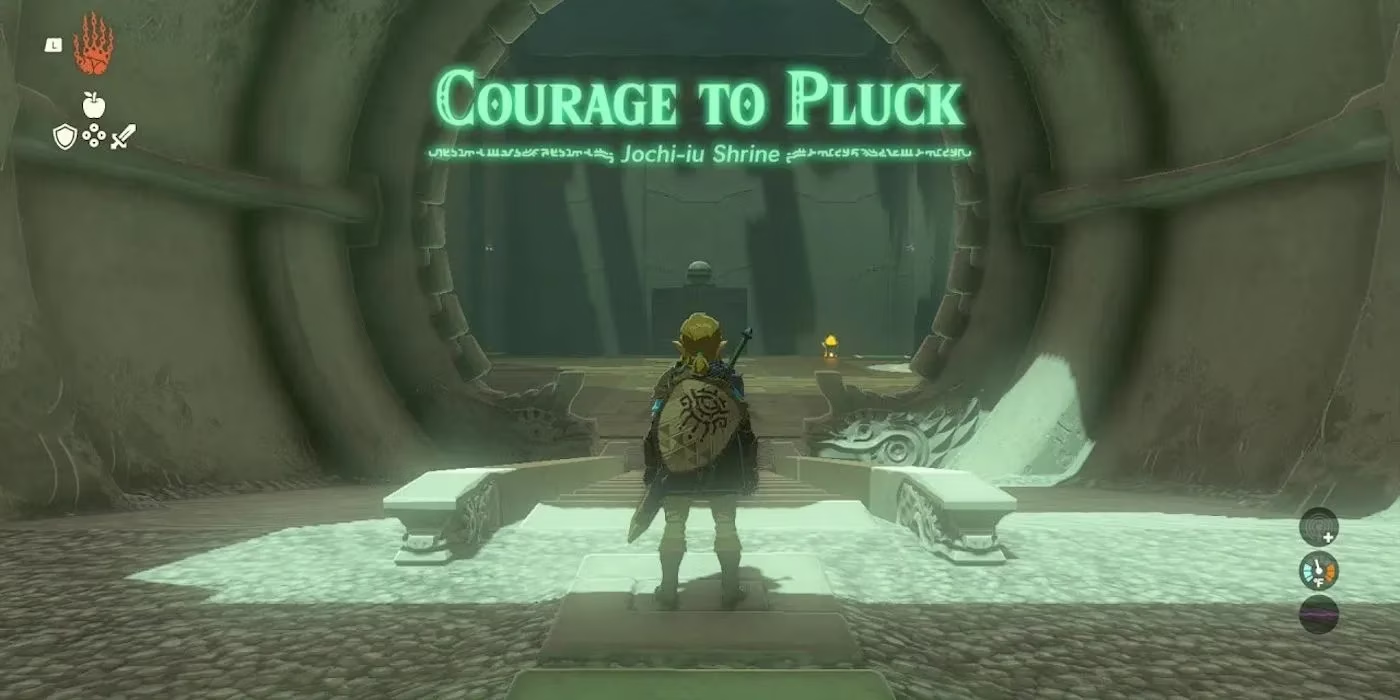
Last and most lamented is the Jochi-iu Shrine, the "Courage to Pluck." It’s Jenga. It’s just a giant, glorious, physics-based game of Jenga, using Ultrahand to yoink blocks from a towering stack. In a game that redefined creativity, finding a perfect, real-world game recreation was a gem. But the tower is over before the real anxiety can set in. Everyone knows the best Jenga happens in those wobbly, near-death-experience final moves. This shrine needed to be a dizzying sky-scraper of a task, a legendary test of nerve that players would boast about conquering for years. It’s the ultimate proof that in the Shrines of Light, sometimes the brightest stars burn out the fastest, leaving Hyrule’s hero forever wondering what could have been.
Community context is referenced from HowLongToBeat, and it helps frame why these “blink-and-you’ll-miss-it” Tears of the Kingdom shrines can feel so jarring: when players are already investing dozens (or hundreds) of hours into exploration and experimentation, a micro-challenge like a one-step combat drill or a fast-ended Ultrahand puzzle can read less like a rewarding checkpoint and more like a premature cut-to-black, especially compared with the longer multi-stage shrine experiences that better match the game’s sprawling time commitment.