The Shrinking Sheikah: Why Impa and Robbie Get Shorter in Tears of the Kingdom
Discover the intriguing mystery behind Sheikah aging and character design in The Legend of Zelda: Tears of the Kingdom, as we explore why beloved figures like Impa and Robbie appear dramatically shorter, delving into fascinating theories about storytelling and visual identity.
As I explore the vast lands of Hyrule in The Legend of Zelda: Tears of the Kingdom, I can't help but notice the familiar faces from Breath of the Wild. The world has changed—chasms have opened, the sky islands float above, and some characters show the passage of time. Yet, one detail about the Sheikah tribe members, particularly Impa and Robbie, has always intrigued me: why do they appear so much shorter now compared to their younger selves? It's a subtle design choice that, upon closer inspection, opens up a fascinating discussion about aging, character design, and storytelling.
When I first met Impa in Kakariko Village, her stature immediately stood out. She's barely half of Link's height, with a large head and a hunched posture. This is a stark contrast to the Impa I remember from the Hyrule Warriors games, where she was tall, athletic, and wielded a giant blade with ease. Robbie, the eccentric inventor at the Akkala Ancient Tech Lab, shares this trait. So, what happened? Unlike Purah, who uses her age-altering rune to appear younger, there's no in-game potion or magical explanation for their shrinking forms. This led me down a rabbit hole of theories. Is it just a visual trick, or is there something deeper at play about the Sheikah and aging?
🧬 The Scientific Perspective: Do People Really Shrink?
My first thought was to look at real-world aging. Isn't it true that people get shorter as they grow older? According to medical sources, yes, there are physiological reasons for a decrease in height with age:
-
Weakening Cartilage and Muscles: The cushions between our bones lose mass.
-
Flattening Spinal Discs: The discs between vertebrae compress, shortening the spinal column.
-
Bone Density Loss: Osteoporosis can lead to a more pronounced stoop.
In reality, the average person might lose about 1-3 inches in height over a lifetime. But Impa's transformation is far more dramatic—she's lost over a foot! Of course, we must remember she's around 120 years old in Tears of the Kingdom. Could extreme age combined with the artistic liberty of game design explain this exaggeration? Perhaps. The game isn't striving for photorealism; it's crafting a memorable visual identity.
This theory gets more interesting when we consider Pikango, the wandering Sheikah painter. He lives in the same village as Impa but doesn't show any significant height loss. In fact, he stands taller than Link! Why the discrepancy? Let's compare their lifestyles:
| Character | Age Estimate | Primary Activity | Observed Height Change |
|---|---|---|---|
| Impa | ~120 years | Sedentary (Village Elder) | Dramatic decrease |
| Robbie | ~120 years | Sedentary (Inventor) | Dramatic decrease |
| Pikango | Possibly younger | Active (Traveling Painter) | Minimal to no decrease |
Pikango is constantly on the move, hiking across Hyrule to capture its beauty. An active lifestyle is known to help maintain bone and muscle mass, potentially slowing age-related shrinkage. Impa and Robbie, by contrast, have roles that keep them relatively stationary. Could this be the game's subtle nod to the benefits of exercise? It's a clever layer of environmental storytelling if so.
🎨 The Artistic Choice: Visual Shorthand in Character Design
Sometimes, the simplest answer is the right one. As a player, I instantly understood Impa's role the moment I saw her: she is the wise elder. Her design communicates this without a single line of dialogue. This isn't unique to Zelda; it's a common trope in anime and manga, where exaggerated features serve as visual shorthand.
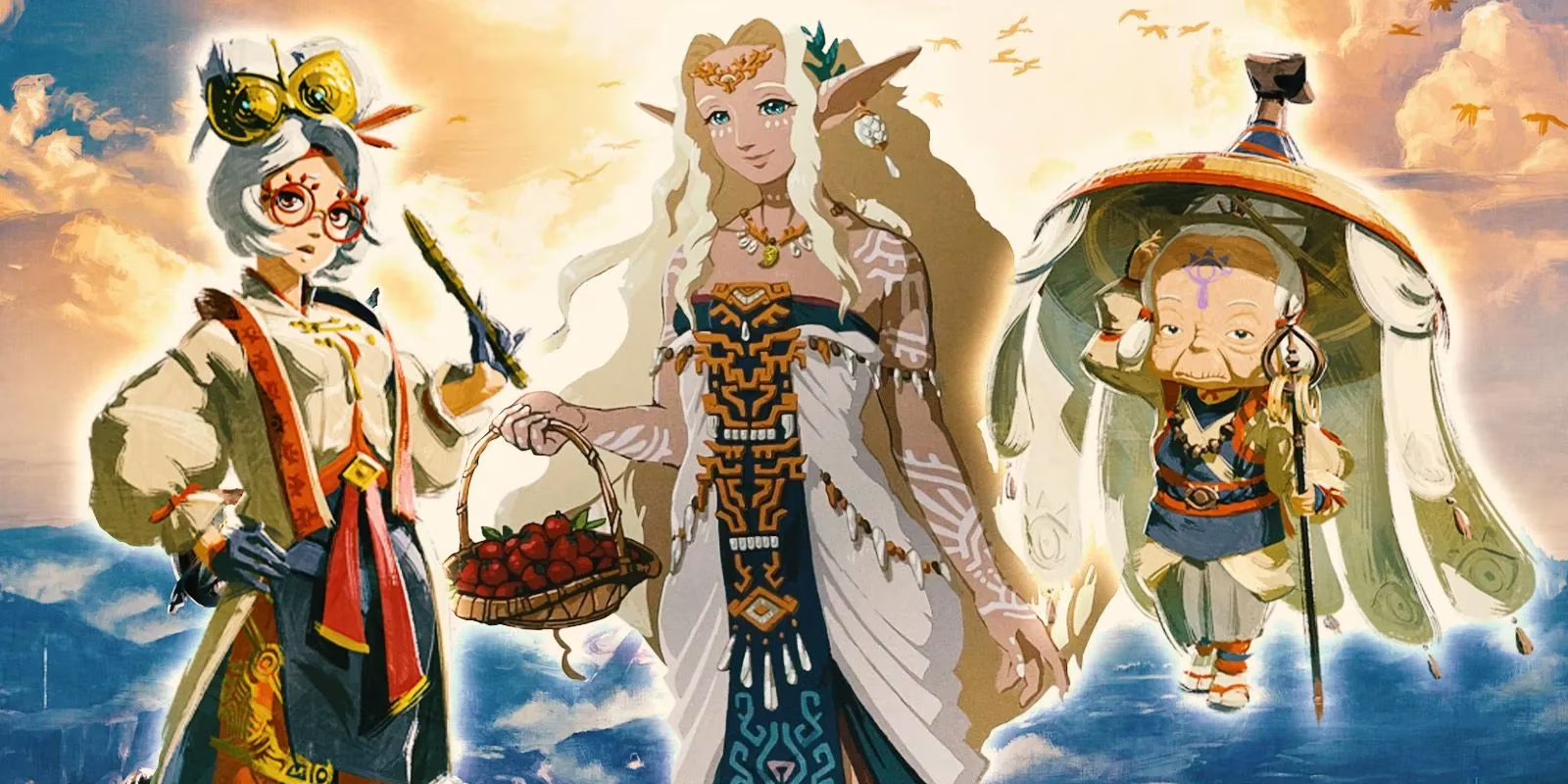
Think about it: large, expressive eyes often signify innocence or emotion; spiky hair might indicate a rebellious spirit. For Impa and Robbie, shortness combined with a large head and hunched posture instantly signals old age and wisdom. Their silhouettes are immediately recognizable. Impa's oversized head isn't just a quirky detail—it visually represents a mind filled with a century's worth of knowledge and memories of the pre-Calamity world. When she speaks, you listen, because her design has already told you she's important.
Robbie's design follows similar principles. His wild hair and giant goggles scream "eccentric scientist," even before he starts talking about ancient technology. Their diminished height sets them apart from other Sheikah, like Paya or the researchers, emphasizing their unique narrative roles. They aren't just villagers; they are guardians of history and innovators shaping Hyrule's future.
🤔 So, Which Explanation Is Correct?
After pondering this, I believe it's not an either/or situation. The brilliance of Tears of the Kingdom's design lies in its layers:
-
Scientific Plausibility: The game grounds its fantasy in a relatable human experience—aging and its physical effects.
-
Cultural Reference: It employs familiar visual language from Japanese media to communicate character traits efficiently.
-
Gameplay & Story Integration: Their designs make them memorable NPCs who players naturally seek out for quests and lore.
There's no official lore stating, "The Sheikah shrink due to X magical reason." Instead, the developers made a conscious artistic decision to exaggerate a natural process for the sake of clear, effective characterization. This approach enriches the world without needing lengthy exposition. When I see Impa, I don't question the biology; I feel the weight of her years and the trust the game places in her as a guide.
💎 The Impact on the Player Experience
This small detail has a big impact on how I connect with these characters. Their design fosters immediate empathy and respect. Impa isn't just a quest giver; she's a living monument to Hyrule's resilience. Robbie's quirky appearance makes his technological breakthroughs feel even more inspired. They become some of the most likable and memorable characters in the game precisely because their visual design so perfectly encapsulates their personalities and roles.
Furthermore, this consistency across Breath of the Wild and Tears of the Kingdom strengthens the sense of a living, evolving world. The characters have aged, and their physical forms reflect that passage of time in a stylized yet meaningful way. It's a testament to Nintendo's attention to detail that such a seemingly minor trait can spark so much thought and discussion among players like myself.
In the end, whether driven by a nod to real-world aging, a clever use of visual storytelling tropes, or simply masterful character design, the shrinking Sheikah of Tears of the Kingdom stand as a brilliant example of how video games can communicate complex ideas through imagery. It makes me wonder: what other subtle design choices in Hyrule are waiting to be unpacked? The beauty of this game is that it invites us to look closer, think deeper, and appreciate the craft behind every pixel.