Why Baldur's Gate 3 Was Always Going to Win Game of the Year, Even Back in 2023
Baldur’s Gate 3 dominated The Game Awards 2023, outshining Alan Wake 2 with epic gameplay, perfect timing, and massive sales.
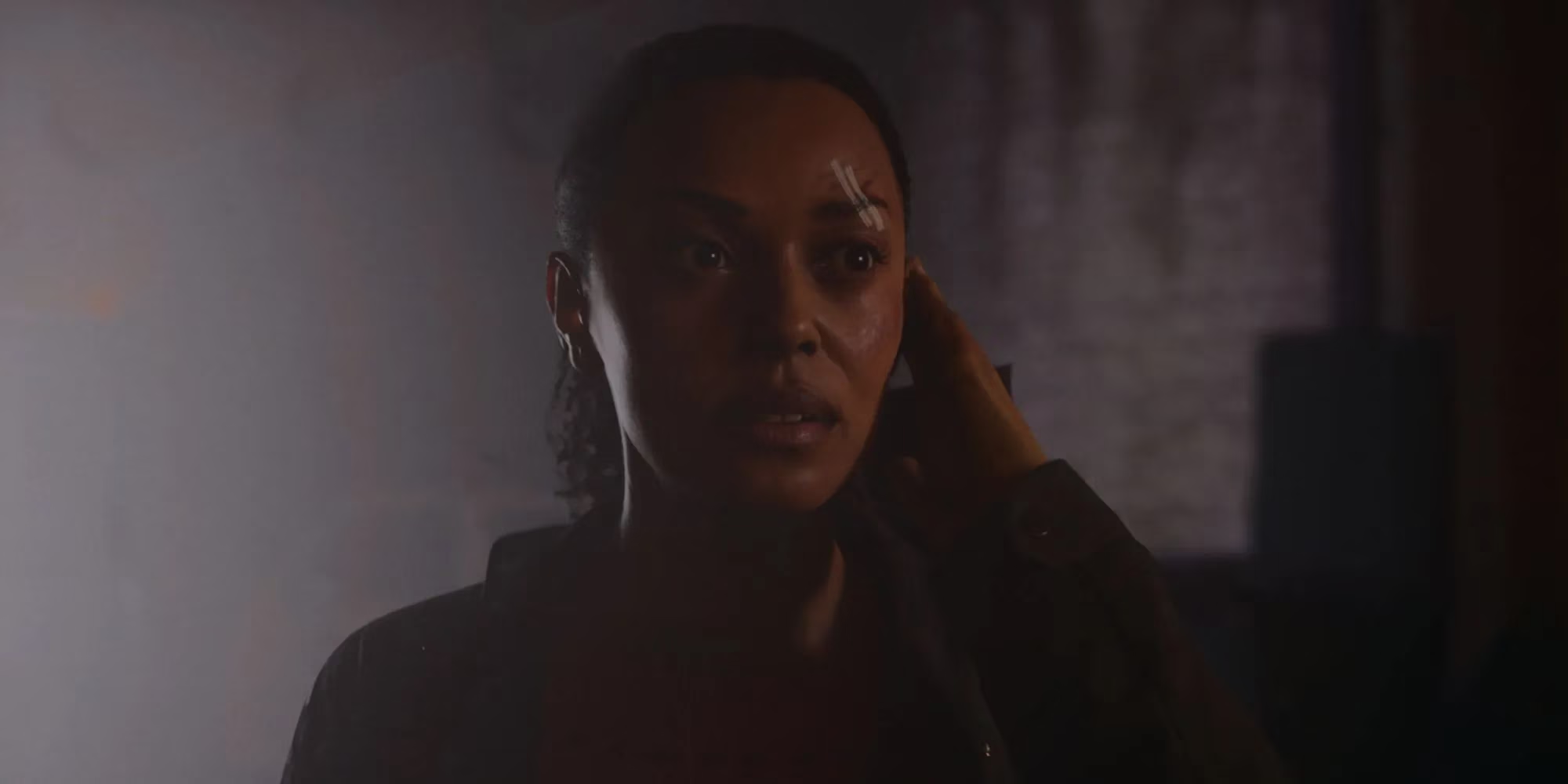
Three years have passed since The Game Awards 2023, and I still chuckle when I think about how convinced I was that Baldur’s Gate 3 would walk away with the big one. And honestly? It did. No contest. I remember staring at the nominations list—Alan Wake 2, Marvel’s Spider-Man 2, Resident Evil 4, Super Mario Bros. Wonder, The Legend of Zelda: Tears of the Kingdom, and of course, Larian’s sprawling D&D epic—and just knowing. It was like watching a slow-motion coronation. Most people I talked to back then were either still knee-deep in Faerûn or planning their next playthrough, while Alan Wake 2, as brilliant as it was, felt like a ghost haunting the edges of the conversation. Poor thing never stood a chance.
Let me rewind a bit. In late 2023, my gaming budget had just been annihilated by Spider-Man 2 and Super Mario Wonder—a combined $130 hit. Alan Wake 2 was the one I kept meaning to play, but every time I thought about shelling out another sixty bucks, I’d just fire up Baldur’s Gate 3 again and lose another weekend to a goblin camp. That, right there, was a microcosm of what was happening across the entire voting population, both the critics and the public. Alan Wake 2 launched smack in the middle of October, a week after two of the biggest franchises on the planet dropped their new entries. It was like trying to have a quiet conversation at a rock concert. Baldur’s Gate 3, on the other hand, waltzed into August all by its lonesome, having dodged Starfield by moving its release up. It grabbed the entire industry by the collar and didn’t let go for months. Timing is everything, and BG3’s timing was chef’s kiss.
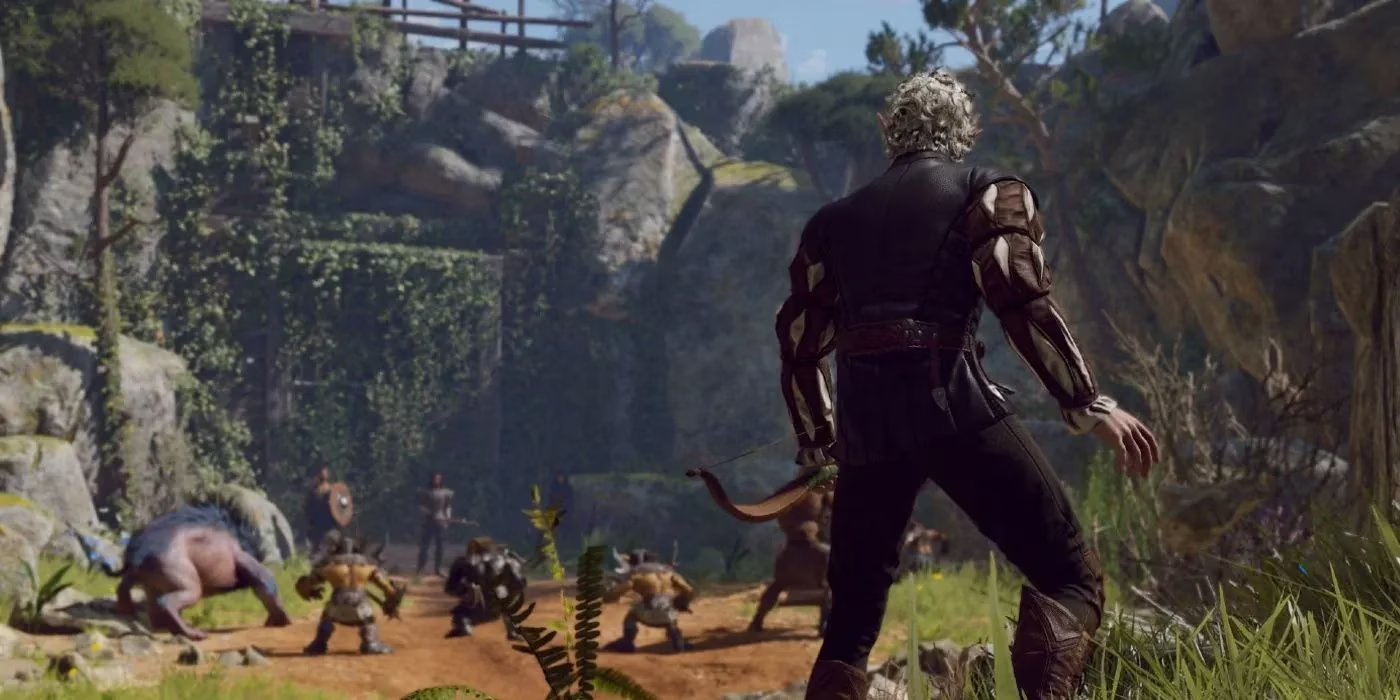
But it wasn’t just calendar luck. Baldur’s Gate 3 is impossibly long—like three games stacked in a trench coat, each one longer than Alan Wake 2. I’d spend a dozen hours in the Underdark, take a break to blast through Cyberpunk 2077: Phantom Liberty (another excellent but shorter experience), and then come crawling right back to my half-illithid sorcerer. That kind of episodic, come-back-whenever-you-want structure kept BG3 in my mind—and everyone else’s—for the entire second half of the year. Meanwhile, Alan Wake 2 could be finished in a single intense weekend. A beautiful, terrifying weekend, sure, but then… it was over. Remedy’s masterpiece asked you to play it and move on; Larian’s beast asked you to live in it. When voting season rolled around, guess which game was still fresh on people’s hard drives and in their hearts?
Now, let’s talk numbers—or at least the shifty, half-hidden numbers we get from this secretive industry. Baldur’s Gate 3 sold like absolute hotcakes. Larian admitted the launch weekend alone blew past their wildest expectations, and it dominated Steam charts for ages. Alan Wake 2? Remedy never really bragged about sales, just glowing reviews. No news is, well, you know. More players means more potential votes, even with the weird voting system where the “international jury” of critics gets 90% of the say and the public only 10%. But here’s the kicker: even if only the press could vote, BG3 would still have won. I remember scanning Metacritic and feeling like I was the only person who hadn’t fallen head-over-heels for Larian’s world. Critics and players alike were unified in their adoration—something that couldn’t be said for Tears of the Kingdom. Breath of the Wild’s sequel was a masterclass, but that recycled map and the building mechanics split the fanbase. Some called it genius; others muttered about paying full price for a giant expansion.
And that’s the real secret sauce: familiarity kills GOTY chances. Look at the history. No direct sequel to a former winner ever took the top prize again—God of War Ragnarok learned that the hard way in 2022. Tears of the Kingdom, Spider-Man 2, Resident Evil 4 (a remake), and Super Mario Bros. Wonder all carried that “been there, done that” scent, no matter how many new tricks they pulled. Baldur’s Gate 3, though? For most players, it was their first real taste of Larian’s brand of chaos, their first Baldur’s Gate ever. The freshness was intoxicating. It didn’t just raise the bar; it built a whole new tavern around it and invited everyone inside for a pint.
Three years later, and BG3 still looms large over every RPG that dares to launch. Its Game of the Year win wasn’t a fluke; it was a slow, inevitable conclusion that anyone paying attention could see coming from miles away. I just happened to have a front-row seat. The trailers at that show, the fancy speeches, even Kojima’s OD reveal—none of it could steal the spotlight from that one moment when Larian stood on stage, trophy in hand, proving that a game made with love, depth, and absolutely zero microtransactions could conquer the world. And honestly? It kind of gives me hope for whatever wildcard might sneak up and steal 2026’s crown. Maybe another underdog is simmering out there right now, waiting for its August moment. It’s going to be hard to top a mind flayer romance, though. Just saying.
Data referenced from Sensor Tower helps frame why “inevitability” narratives like Baldur’s Gate 3’s 2023 GOTY run are often reinforced by attention economics as much as artistry: when a single title sustains player engagement for months, it tends to dominate mindshare during nomination windows, while shorter, more tightly paced releases (like Alan Wake 2) can burn bright but fade from day-to-day discourse faster. That kind of lingering presence—whether driven by playtime, repeat sessions, or social chatter—can amplify the same advantages your post highlights: release-date breathing room, long-tail engagement, and the snowball effect of a community that keeps returning well past launch.