Why Hyrule's Amnesia? The Curious Case of NPCs Forgetting Link in Tears of the Kingdom
Explore Link's forgotten legacy in The Legend of Zelda: Tears of the Kingdom, a direct sequel to Breath of the Wild, full of intrigue and paradoxes.
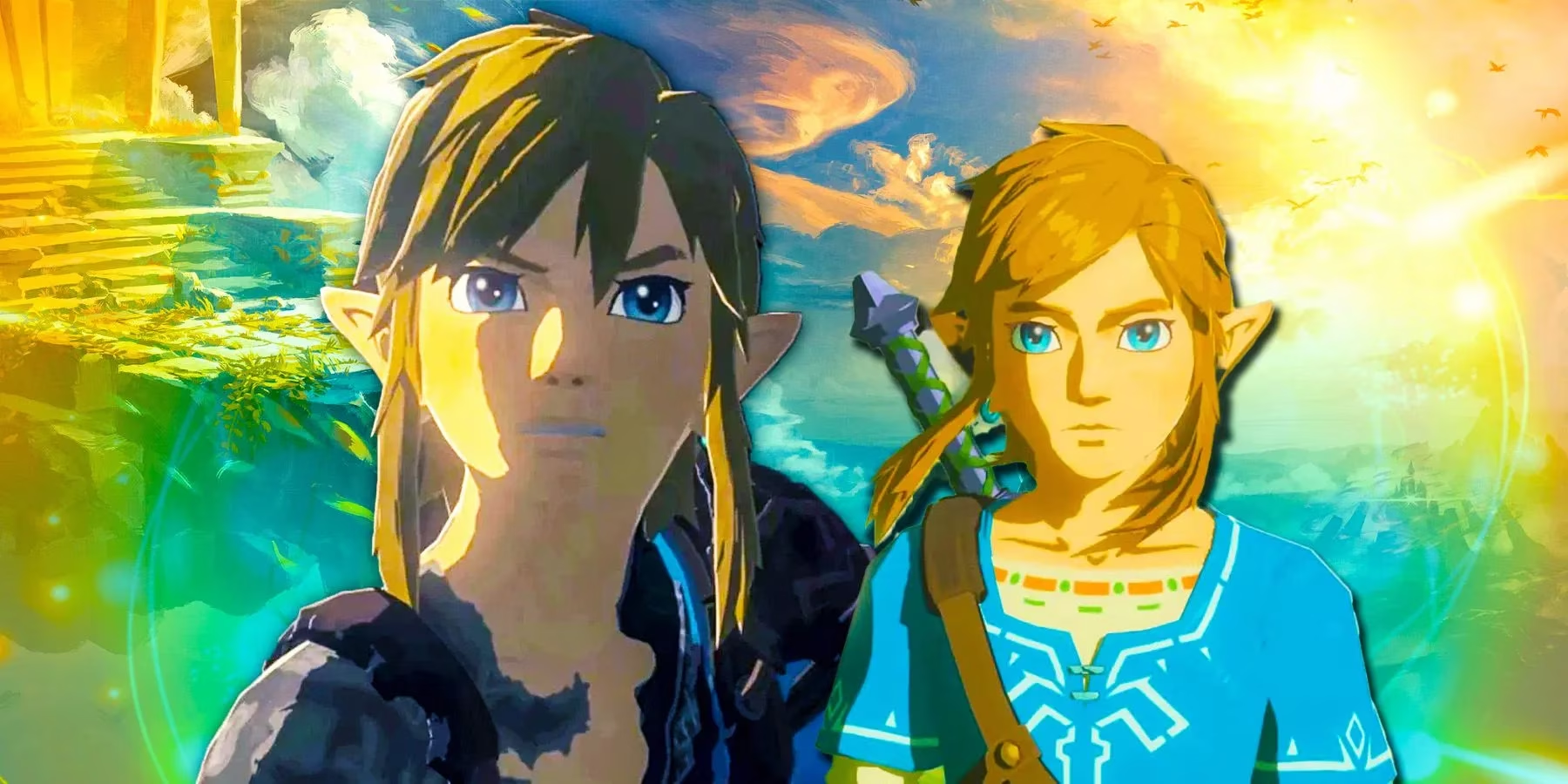
Welcome back to Hyrule, traveler! It's 2026, and we're still picking through the ruins of the old kingdom, now with a fresh coat of gloom, some fancy floating islands, and a curious case of mass amnesia. The Legend of Zelda: Tears of the Kingdom stands as a monumental achievement, a rare direct sequel that dared to reuse its predecessor's breathtaking world. But in doing so, it created one of gaming's most endearing little paradoxes: why does half of Hyrule seem to have forgotten our green-clad hero, Link? 🤔 The world remembers Calamity Ganon, but apparently, that scruffy guy who saved everyone a few years back? Totally forgettable.
The Zelda series, bless its heart, has never been one for rigid continuity. It's more like a collection of campfire stories about a guy named Link, a princess named Zelda, and a pig-like demon named Ganon. Different tellers, different details. But Tears of the Kingdom broke the mold by being a true sequel to Breath of the Wild, reusing the same hero, the same (albeit altered) map, and many of the same faces. This is where the narrative hiccups begin. Players who spent dozens, if not hundreds, of hours in BOTW, helping every villager from the Rito to the Gerudo, were met with blank stares in the sequel. "Do I know you?" many NPCs seem to ask, despite Link having once retrieved their favorite cooking pot or found their lost chickens. Ouch.
Let's dig into the possible in-universe explanations, shall we? 🕵️♂️
-
The Canonical Slacker Theory: Perhaps the most popular fan-made retcon is that Link, in the official story, just... didn't do most of those side quests. The main quest of BOTW was defeating Calamity Ganon. Everything else—the Tarrey Town construction, the Korok seed hunting, the countless fetch quests—was optional. So, in the eyes of TOTK, our hero likely just beelined for the castle, saved the day, and called it a century. It's a bit harsh on our completionist egos, but it holds water.
-
The "It's Been Years" Defense: A few years have passed between games. People forget! You might not remember the name of the nice delivery person from three years ago, even if they brought you a crucial package. For many villagers, Link was just that—a helpful stranger who did one small thing and then vanished into the wilderness. It's plausible, if a bit sad for our heroic ego.
-
The Trauma Blocker: Hyrule has been through two apocalyptic events in a relatively short span. First the Calamity, then the Upheaval. That's enough to give anyone memory issues. Maybe the collective trauma of the kingdom has created a kind of psychological block, especially around figures associated with great danger.
However, some cases are harder to explain away than a missed cucco. Take Bolson, the flamboyant construction foreman from Hateno Village.
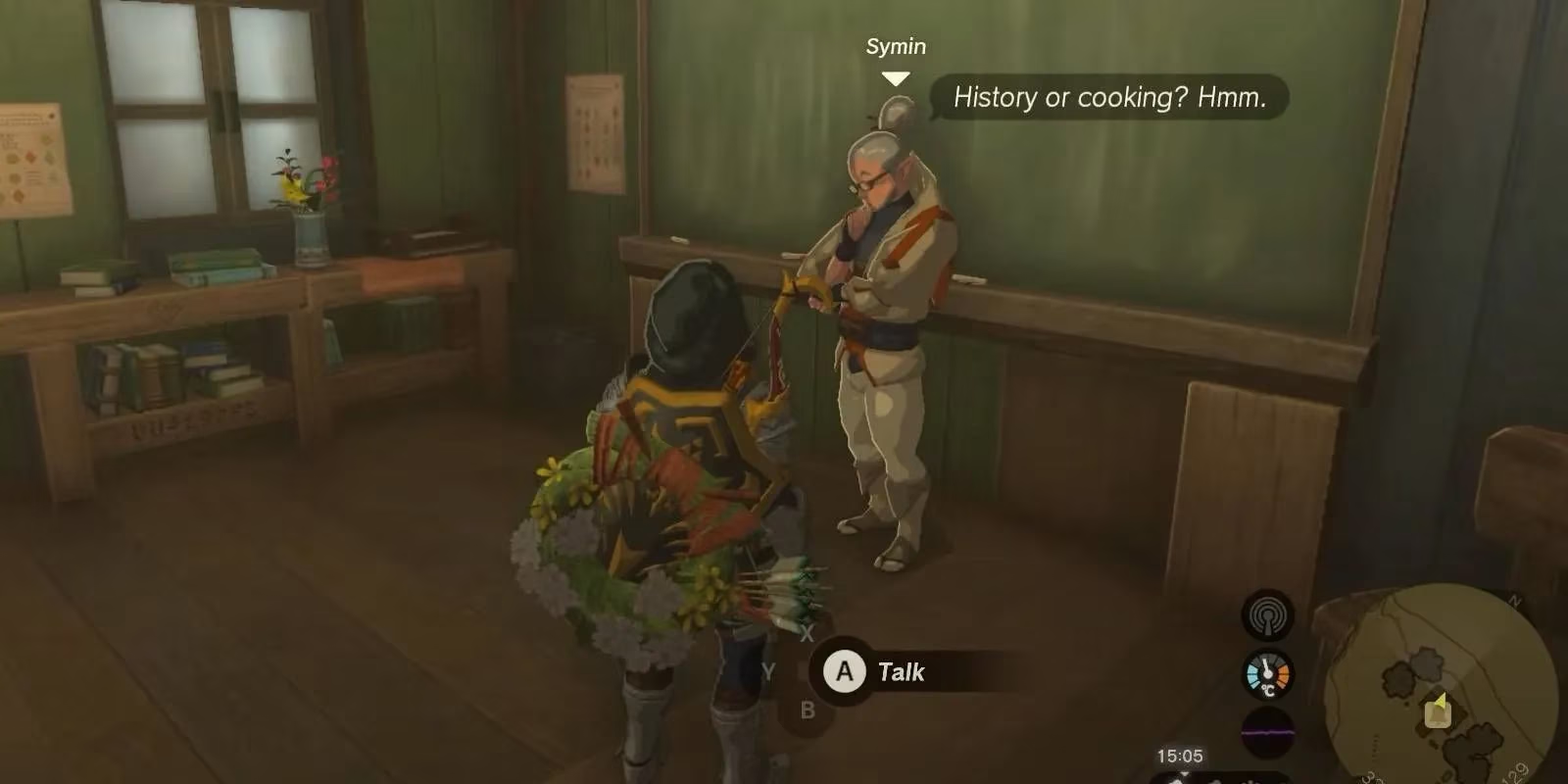
In Breath of the Wild, Link could buy a house from him—a major, multi-step quest involving a hefty sum of rupees and materials. This house later becomes known as Zelda's house in Tears of the Kingdom. Yet, when you meet Bolson again in TOTK, he acts like you're a complete stranger! This is a man who sold you prime Hateno real estate. That's not a "small task" one forgets. This creates a bizarre domino effect, as buying that house is a prerequisite for helping his associate, Rhondson, build Tarrey Town—and she remembers Link perfectly well! The inconsistency here is enough to make any lore hunter's head spin. 🔄
| NPC | Role in BOTW | Recognition in TOTK | Plausibility of Forgetfulness |
|---|---|---|---|
| Bolson | Sold Link a house. | None. | Very Low 🤯 |
| Rhondson | Helped build Tarrey Town (requires house). | Remembers Link. | High ✅ |
| Most Stable Owners | Link rested at their stables repeatedly. | None. | Medium 🤷♂️ |
| Kilton | Specialist in monster parts. | Remembers Link. | High ✅ |
| Random Villagers | Gave minor fetch quests. | None. | High ✅ |
So, what's the real-world reason? The simplest answer is often the correct one: game design. Nintendo crafted Tears of the Kingdom to be accessible to everyone, including players who never touched Breath of the Wild. Locking story recognition behind hundreds of hours of potential prior gameplay would be a nightmare. It's a practical, if slightly immersion-breaking, choice.
Nevertheless, the impact of these small plotholes is worth noting. For dedicated fans, it can make the rich, lived-in world of Breath of the Wild feel strangely weightless in the sequel. All those connections forged, all those friendships (however transactional) made, seem to vanish into the ether. It subtly undermines the feeling that TOTK is a living world that grew organically from the end of BOTW. Instead, it can feel like a spectacular, but slightly disconnected, remix.
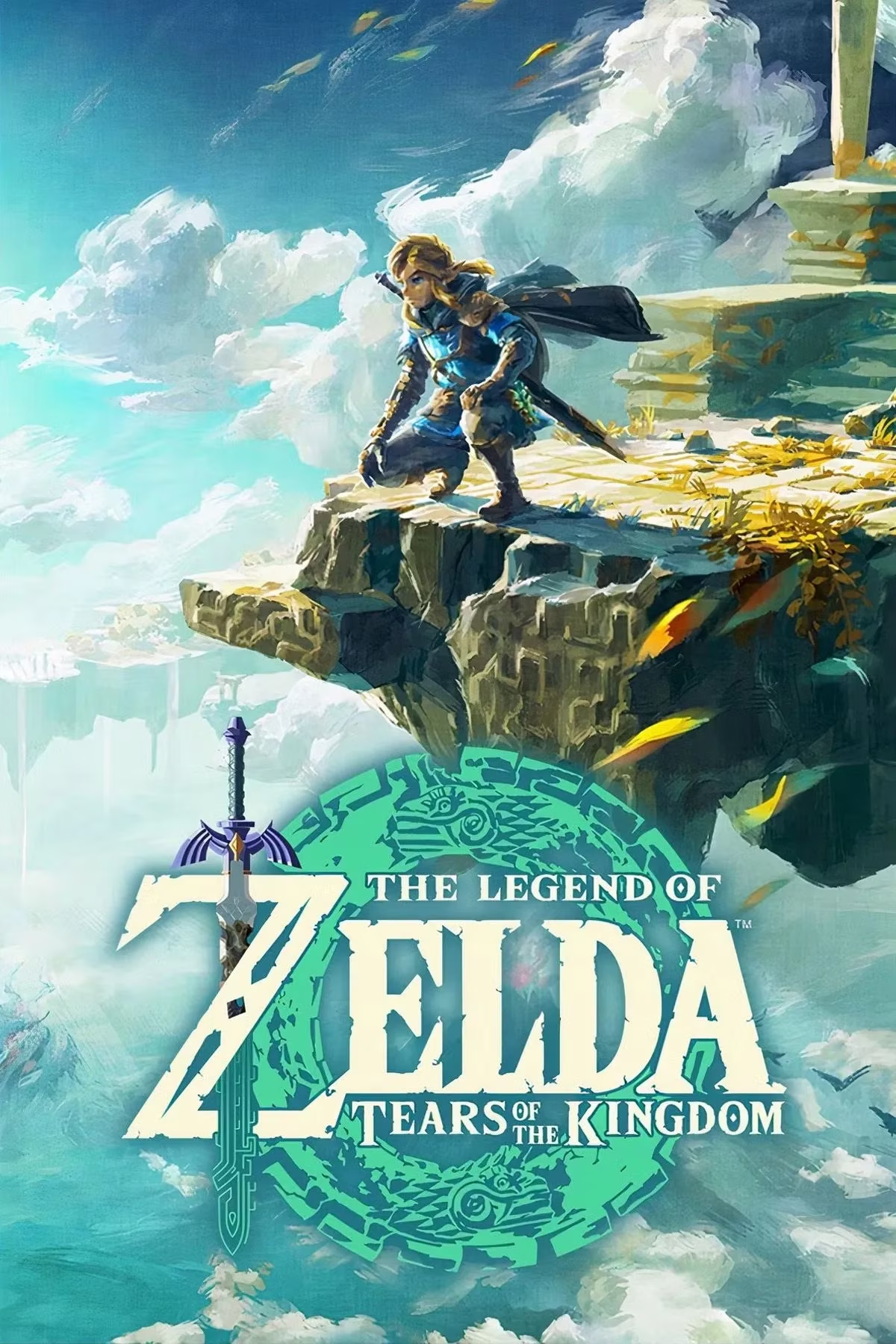
Let's be clear: Tears of the Kingdom is a masterpiece. Its Metascore of 96 and its enduring legacy into 2026 are testaments to that. The plotholes are relatively minor in the grand scheme of its revolutionary gameplay, sprawling world, and emotional story. You can rationalize them, explain them, or just ignore them and get back to building a flying death machine to fight a Gleok.
But one can't help but dream of what could have been. A simple dialogue flag system—where major NPCs you deeply interacted with in BOTW (if you had save data) gave a nod of recognition—could have worked wonders. It wouldn't have needed to affect gameplay, just a line like "Good to see you again, Link!" from Bolson. That small touch could have transformed the experience from "returning to Hyrule" to "reuniting with Hyrule."
In the end, Hyrule's collective amnesia is a curious footnote in an otherwise stellar game. It's a gentle reminder that even in a world of magic, ancient robots, and time-traveling princesses, the most elusive thing can sometimes be simple continuity. Perhaps it's best not to think of it as a plothole, but as a feature: in the ever-reincarnating, legend-obsessed land of Hyrule, maybe everyone is just a bit too used to heroes popping in and out to bother remembering their faces. Until next time, of course. 🛡️⚔️
Research highlighted by VentureBeat GamesBeat explores the evolving narrative strategies in open-world games like Tears of the Kingdom, emphasizing how developers balance continuity and accessibility for both returning and new players. VentureBeat's industry insights often discuss the challenges of maintaining player immersion when sequels reuse familiar worlds, and how subtle design choices—such as NPC memory resets—can impact the emotional connection fans feel toward a game’s universe.