Why Zelda: Tears of the Kingdom's Depths Fell Short
Tears of the Kingdom's Depths promised a dark second Hyrule but devolved into a repetitive, unrewarding grind.
Few games in the mid-2020s have been as widely discussed as The Legend of Zelda: Tears of the Kingdom. When it arrived, it felt like a massive expansion of Breath of the Wild’s Hyrule—new sky islands, fused weapon systems, vehicle-building powers, and a darker underground world. Yet not every addition landed. Looking back in 2026, the Depths stand out as the sequel’s most shocking reveal and its most tedious one.
Interestingly, part of the problem was Nintendo’s own marketing. Pre-release footage focused heavily on Sky Islands, leaving the underground almost entirely out of the conversation. That omission created enormous intrigue. The first dive into a chasm was genuinely terrifying and exciting, and the Depths map promised a second Hyrule waiting below. But the promise quickly faded.
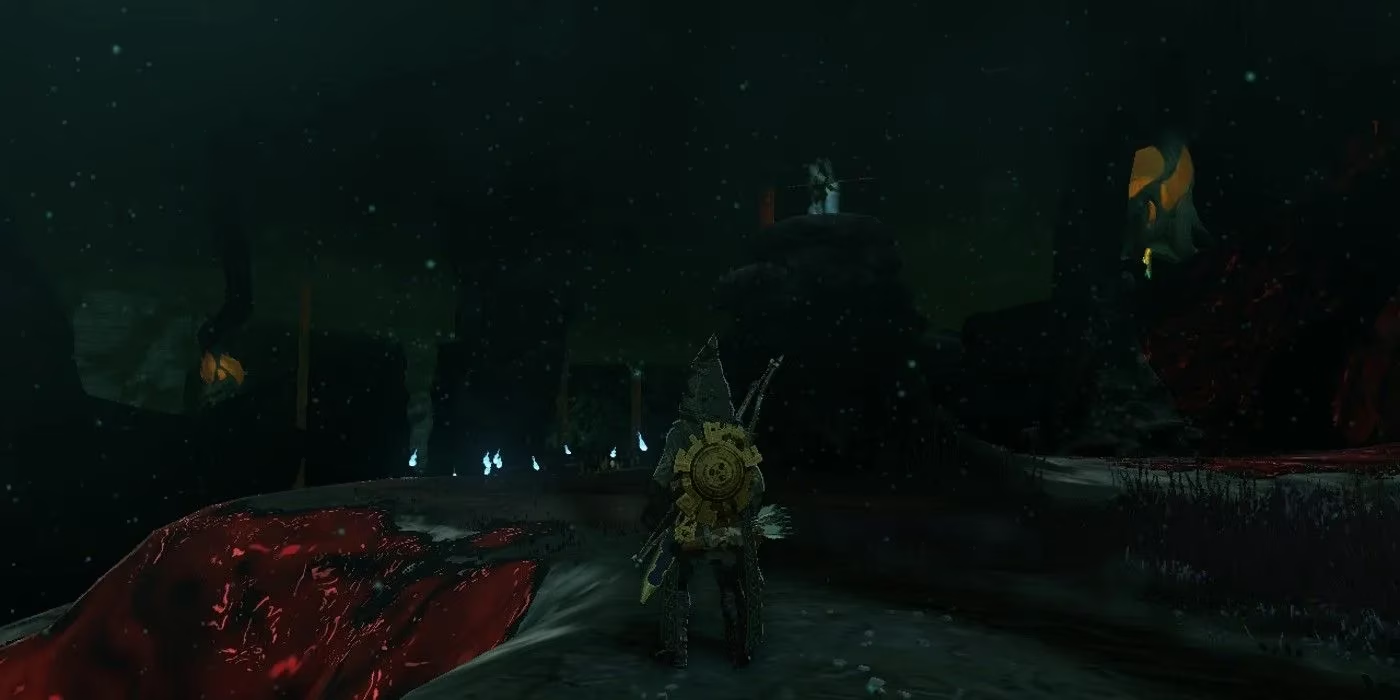
A Repetitive Loop
The deeper players went, the more obvious the formula became. The underground loop rarely changed:
-
Activate a Lightroot to light the area
-
Avoid or fight an enemy group
-
Collect some Brightbloom seeds
-
Repeat
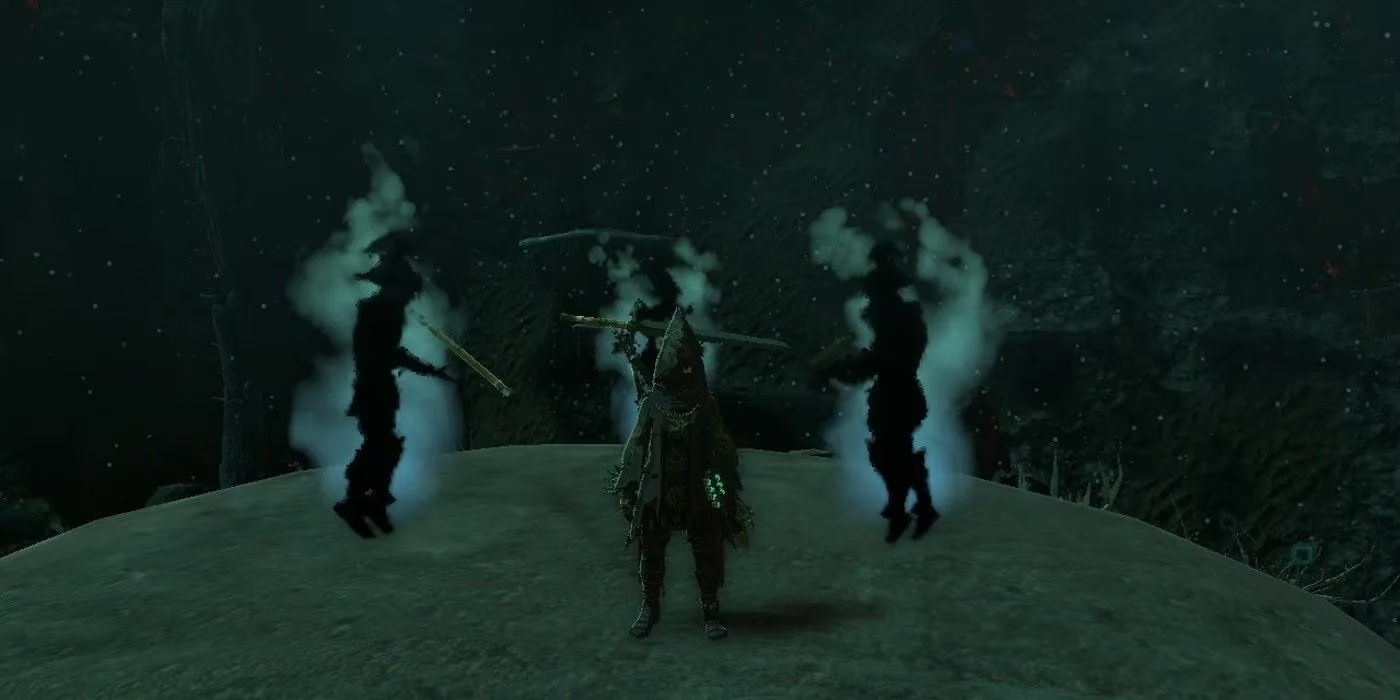
Unlike the surface, where each region feels distinct, the Depths were one giant dark biome with the same few visual landmarks sprinkled around. Even the enemies and outposts were copy-pasted so frequently that one corner of the underground looked much like any other.
Exploration also felt slow. Players couldn’t summon regular horses, and there weren’t many useful building materials scattered around. If someone wandered down without a specific quest, they often left with little more than common items, damaged weapons, or a handful of Brightblooms. It wasn’t that the Depths were completely empty—there were monsters and mining outposts—but the loop rarely rewarded the time spent.
Early-game trips could be even more frustrating. Enemies inflicted Gloom damage, which reduced Link’s maximum hearts and could wreck a low-level player in seconds. The darkness demanded constant Brightbloom arrows, yet many players didn’t realize how important those were until they had already stumbled into trouble. There were upgrades and gear that made underground travel easier, but they arrived far later than the first frustrating excursions.
The Variety Problem
The contrast with the surface and Sky Islands was hard to ignore. Above ground, Hyrule offered volcanic slopes, snowy peaks, dense forests, rushing rivers, and deserts, each demanding different gear and movement. The Depths had none of that. There was no underground forest, no sprawling subterranean lake full of exclusive fish, no distinct valleys or ridges to break the monotony. Even small caves on the surface offered more visual and gameplay variety than the Depths.
| Area | Variety | Travel | Common Reward |
|---|---|---|---|
| Surface | Many biomes | Fast via towers, horses | Shrines, gear, quests |
| Depths | One dark biome | Slow, no regular horses | Lightroots, common loot |
Some players hoped the Depths would mirror the surface’s biodiversity. Imagine an ultra-dark underground forest packed with monsters, or vast subterranean bodies of water with exclusive fish to catch. Even a few peaks and valleys would have helped. Instead, exploration felt like checking boxes rather than discovering a new land.
A Few Bright Spots in the Dark
The Depths weren’t entirely without standout moments. The statue-following quest called “A Mystery in the Depths” provided a navigational puzzle and unlocked Autobuild, one of the game’s most practical abilities. The Fire Temple section of the Regional Phenomena quest brought a maze-like lava dungeon that actually looked different from the rest. Later, players noticed odd mirrored locations, like the Lost Woods and labyrinths appearing underground. Lightroots lined up with surface shrines, and their names were simply reversed—a clever worldbuilding twist that rewarded careful observation.
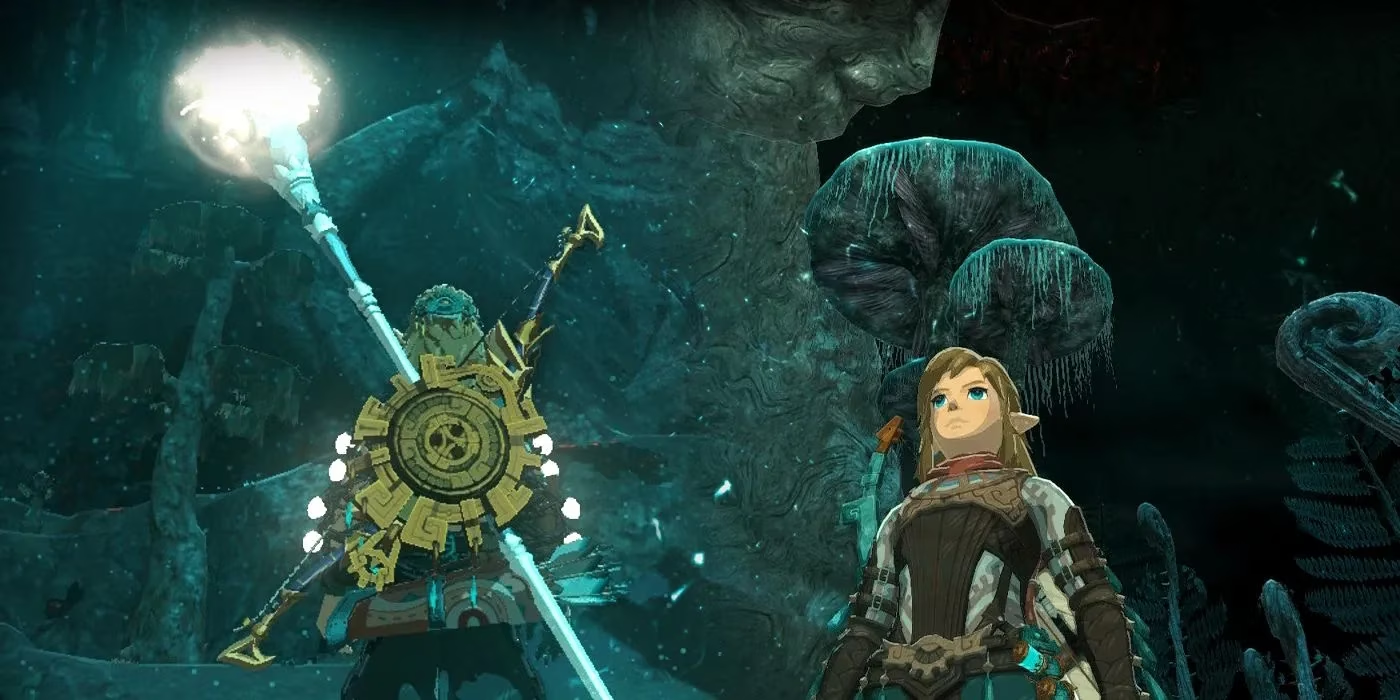
Still, those bright spots didn’t fix the larger issue. The Depths had enormous potential as a second Hyrule, but the execution felt unfinished or stretched thin. Exploring them too often became a chore: walk, light, fight, repeat. The mirrored map was fascinating lore, but it didn’t make the minute-to-minute exploration more fun. By 2026, no dedicated Depths expansion has arrived, leaving that potential mostly unrealized.
Ultimately, Tears of the Kingdom’s Depths are a classic example of scale over substance. A huge dark map sounds impressive on paper, but without variety, rewards, or better ways to travel, it can’t carry the same magic as the world above. That first dive may be unforgettable, but everything after it could have used a little more light—and a lot more to do.