Zelda Dungeon Evolution Echoes vs Tears of the Kingdom
Explore how *The Legend of Zelda* 2025 titles, *Tears of the Kingdom* and *Echoes of Wisdom*, redefine dungeon design, blending innovation with classic exploration for an immersive experience.
In the ever-evolving world of The Legend of Zelda series, 2025 has brought fresh reflections on how dungeon designs shape the player experience, especially when comparing the latest entries. While Tears of the Kingdom (TOTK) captivated audiences with its vast open world, its dungeon mechanics fell short in delivering the classic Zelda magic. On the other hand, Echoes of Wisdom (EOW) revitalized the franchise with a return to nostalgic structures, proving that innovation doesn't have to sacrifice depth. This contrast highlights a crucial lesson for future titles: freedom and experimentation reign supreme, but only when balanced with thoughtful design. Players and critics alike have debated these aspects since the games' releases, and as we look back, it's clear that EOW's approach offers a blueprint for reinvigorating the series' core elements of exploration and discovery. 🔍✨
The Struggles of TOTK's Dungeons
Tears of the Kingdom's dungeons, while visually grand, often left players feeling underwhelmed due to their lack of substance. The game prioritized scale over meaningful engagement, leading to repetitive and frustrating experiences. For instance, dungeons like the Fire Temple demanded lengthy treks across confusing tracks just to reach simplistic puzzles, draining any sense of accomplishment. 🏔️
-
Restrictive Guidance: Maps and objectives were handed to players immediately, with glowing markers showing exact paths to activation points. This eliminated mystery and made progression feel robotic, unlike the thrilling uncertainty that defines Zelda adventures.
-
Overly Simple Puzzles: Challenges were often too easy, with clear visual cues dictating which abilities to use. This stifled critical thinking and left players craving more complexity. As one reviewer put it, 'It's like being on autopilot—no brainpower required!' 🧠
-
Scale Without Soul: Large areas felt empty and tedious, turning exploration into a chore. The obsession with size backfired, creating environments that were impressive to look at but hollow to play through.
This approach contrasted sharply with the freedom offered in the overworld, making dungeons feel like a missed opportunity. Players yearned for the sense of wonder that past Zelda games delivered, but TOTK's design fell flat. 😔
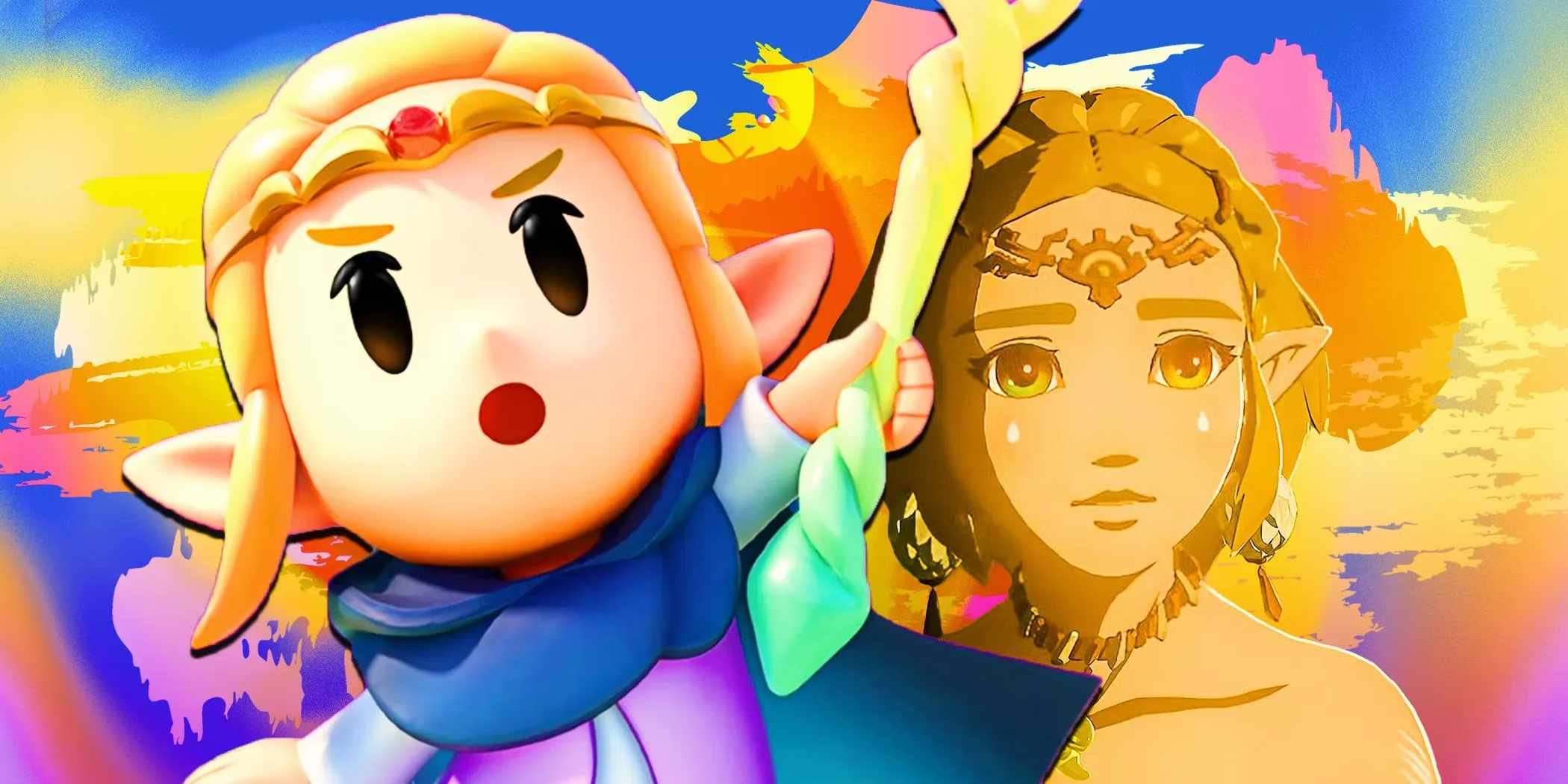
The Triumph of EOW's Dungeon Design
In contrast, Echoes of Wisdom breathed new life into dungeon mechanics by blending classic elements with innovative twists. Players took control of Princess Zelda, using her Echo ability to solve puzzles in creative, open-ended ways. This fostered a sense of discovery and accomplishment that resonated deeply with the community. 🧩💡
-
Classic Structure, Modern Flair: Dungeons required finding Boss Keys, smaller keys, and hidden maps, echoing older titles like Ocarina of Time. This familiar framework brought back the thrill of uncertainty—players never knew where to start, making each step feel fresh and exciting.
-
Encouraging Experimentation: Puzzles weren't about single solutions; they invited players to test different Echoes, like creating environmental copies to access new areas. This freedom led to 'aha!' moments, where figuring out a path felt personally rewarding. As one fan gushed, 'It's all about trial and error, and it pays off big time!' 🎯
-
Integrated Layouts: Dungeons like Lanayru Temple demanded holistic thinking, where changing temperatures in one room affected others. This interconnected design forced players to engage with the entire space, fostering a deeper connection to the environment.
The result? A more satisfying and immersive experience that reminded everyone why dungeons are the heart of Zelda. EOW proved that sticking to roots while adding freedom can elevate gameplay to new heights. ✨
Lessons for Future Zelda Games
As the franchise moves forward, the successes of Echoes of Wisdom offer valuable insights for upcoming titles. Dungeons thrive when players are given autonomy, and EOW nailed this by avoiding the pitfalls of TOTK.
| Feature | TOTK Dungeons | EOW Dungeons | Future Recommendation |
|---|---|---|---|
| Player Freedom | Restricted paths with markers | Open-ended puzzles and exploration | Prioritize experimentation over guidance 🧪 |
| Scale Management | Overly large, leading to emptiness | Moderate size, easy to navigate | Keep areas compact yet rich in detail 📏 |
| Puzzle Design | Simplistic with clear cues | Complex, requiring critical thinking | Blend classic structures with new abilities 🧠 |
| Sense of Discovery | Minimal due to hand-holding | High, with hidden maps and keys | Emphasize mystery and player-led progression 🔍 |
Key takeaways include:
-
Less Is More: EOW's dungeons never became overwhelming—they struck a balance where challenges were tough but not tedious. Future games should aim for this equilibrium to avoid player burnout.
-
Build on Legacy: By revisiting classic dungeon formats, EOW showed that tradition can evolve. Incorporating fan-favorite elements while enhancing freedom ensures longevity and appeal.
-
Focus on Engagement: As seen in EOW, puzzles that span multiple rooms create cohesive adventures. Developers should design dungeons that feel like living worlds, not isolated tasks.
Ultimately, the 2025 perspective confirms that Echoes of Wisdom set a new standard. Its dungeons exemplify how the Zelda series can innovate without losing its soul, paving the way for even more thrilling entries in the years to come. 🚀
This overview is based on data referenced from Statista - Video Games, a leading source for video game industry statistics and market trends. Statista's research highlights how player engagement and satisfaction are closely tied to thoughtful game design, echoing the importance of balanced dungeon mechanics and player autonomy as seen in the evolution of Zelda titles discussed above.